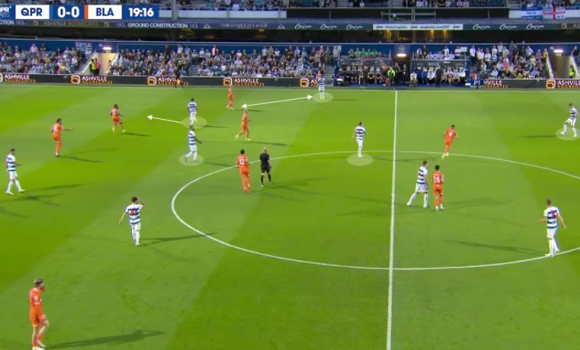
What have we learned so far? — Analysis Monday, 22nd Aug 2022 17:03 by Dan Lambert Delighted to say that Dan Lambert has agreed to bring a series of his tactical analysis pieces to LFW this season, starting with this piece on the early changes and learnings from Michael Beale’s initial games in charge. We’re now just under a month into ‘Bealeball’ since the league opener against Blackburn Rovers. Mixed results, and performances too, but within that there have been some positives and some good tactical tweaks to form the start of Beale’s identity. Nevertheless, the new manager has made it only one win from five, whilst gaining five points from a possible 15. In this piece I have a look at the emerging patterns of play Beale has implemented so far in the first four league games. 1 - Shape, pressing and rest attackBeale plays a quite unique system, a 4-3-2-1 and rather than with wingers he uses “roaming 10s” that play a lot more centrally. It’s a narrow shape, screening opposition sides to play out wide where they implement what’s known as pressing triggers, to create traps in wide areas where teams try to dominate. The main focus of Beale’s pragmatic off ball shape is compactness, an aim to prevent sides playing directly through central areas closer to the goal.
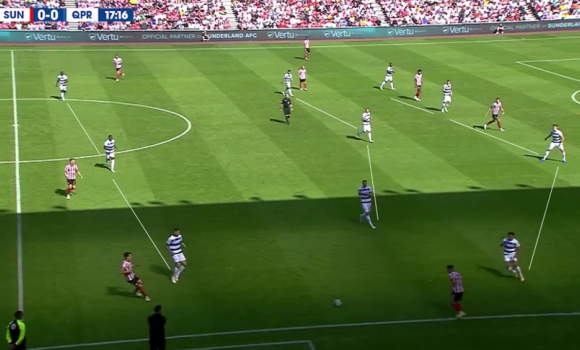
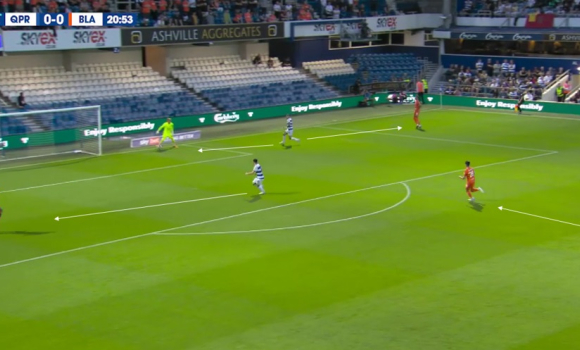
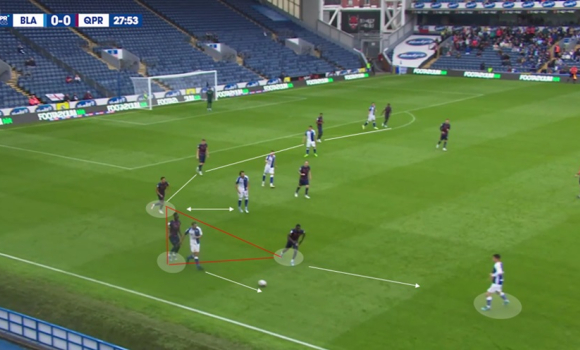
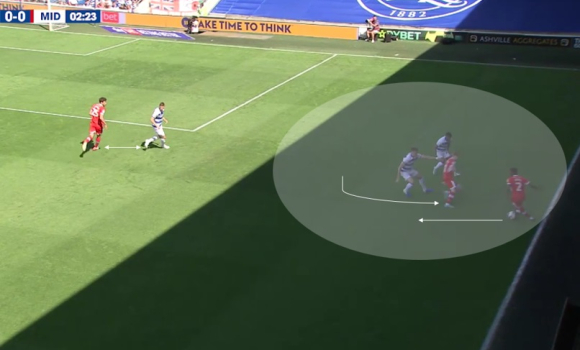
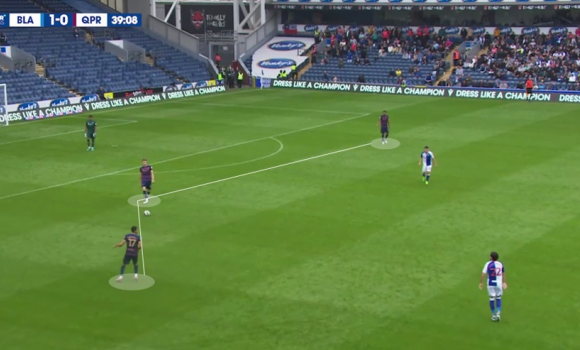
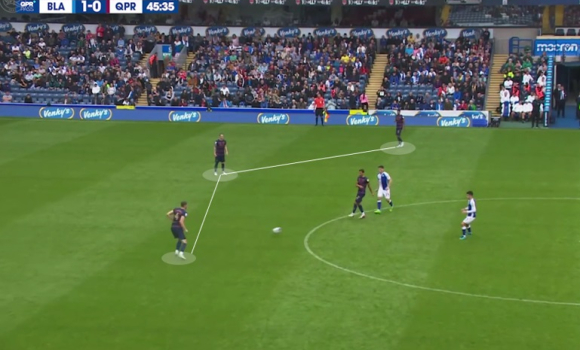
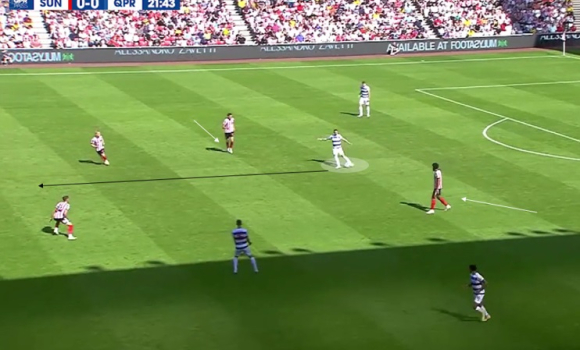
With the narrow shape and allowing the opposition to play out wide comes the pressing triggers, particularly with the use of the wide CMs depending on which side the ball is on. There are two things to note with the triggers. Having spoken to Andre Dozzell in an interview recently, I asked him about the pressing triggers and its effect with pitch geography or generic locations and it was interesting to hear the difference with who presses the wide FB/WB of the opposition. If its ahead of the front three, the ball near ten presses, but if it's behind the front line the ball near CM presses.
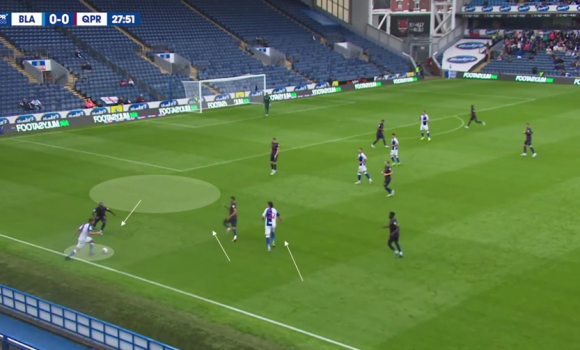
Notice that between the triggers it starts with a zonal press (covers the spaces) and then turns into a man orientated press (man to man) which is a recurring theme with the wide pressing traps.
Also note in that photo above that the front three are high and narrow preventing central areas to be open. The front three being high, leads to my point on ‘rest attack’- a structure in which the attack is set in to create attacking opportunities when regaining the ball. This is particularly important in Beale’s system as the press and narrow shape allow for turnovers. With the front three being high, it allows them to start their attacks closer to the goal, win back the ball higher and create a moment of ‘chaos’ when attacking a team who aren’t in a set shape.
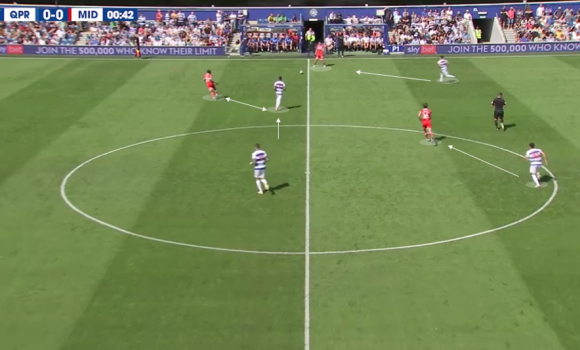
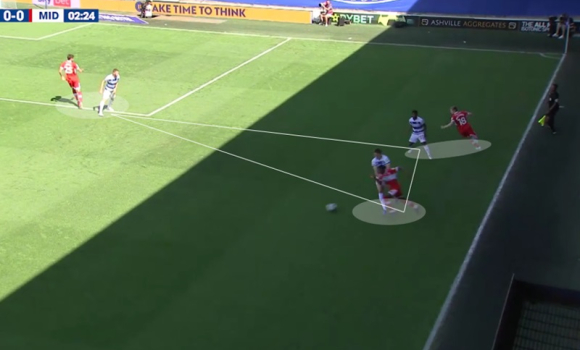
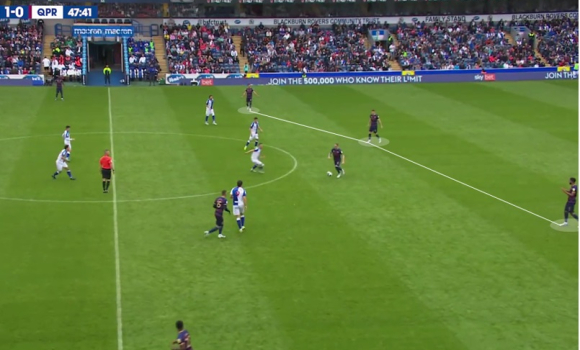
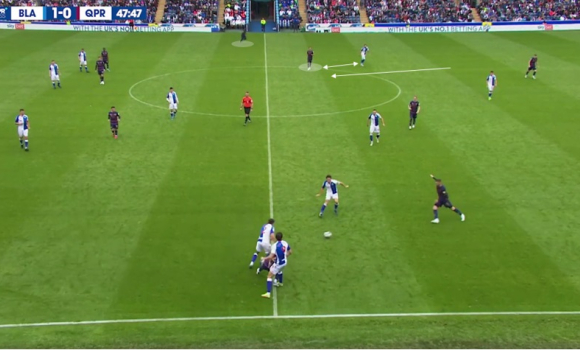
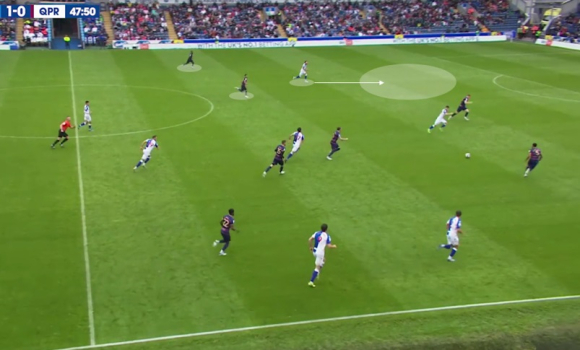
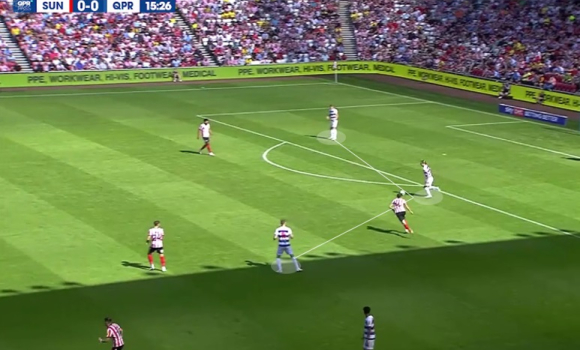
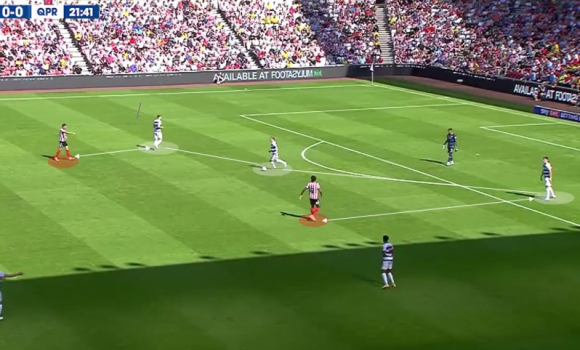
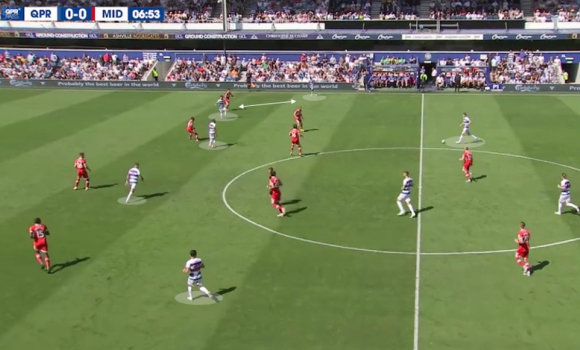
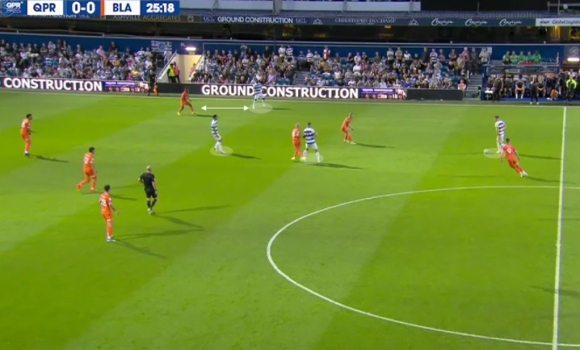
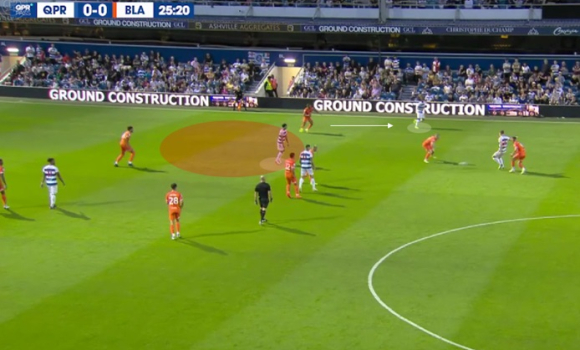
These ideals are pretty much the basics and principles of ‘Bealeball’, with a lot of focus on the off-ball work and a more ‘fluid final third’ ahead. 2 - Defensive RotationsWithin the 4321 system we’ve seen how the “wide three” or even wide two work in tandem with each other. By wide three I mean the full back, ball near no.8 and the ball near no.10. What is interesting is a few variations of the collective three are used by rotating in defensive situations to still maintain a compact shape and by following the man orientated ‘rule’ when doing so. I’ll touch on a few situations below.
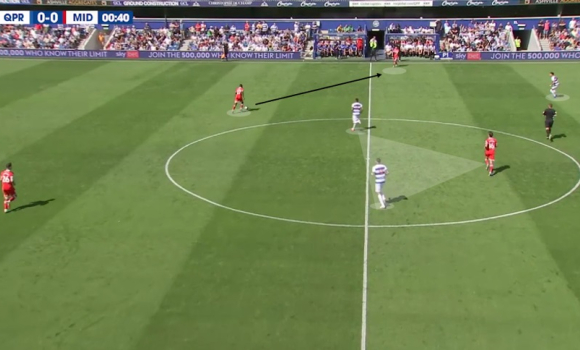
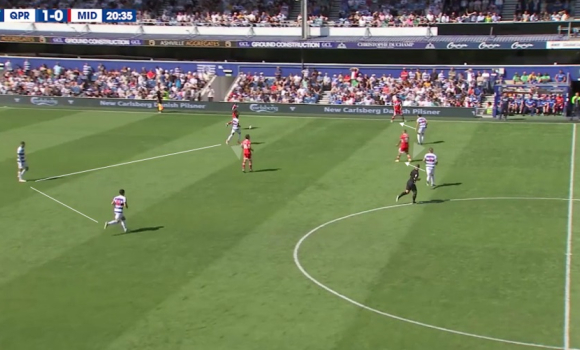
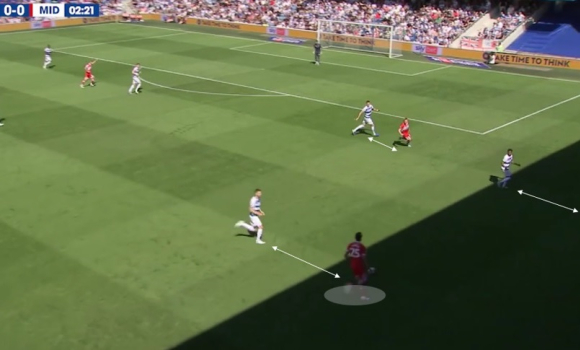
We saw against Middlesborough the same idea in the defensive rotations, but a different three working in tandem.
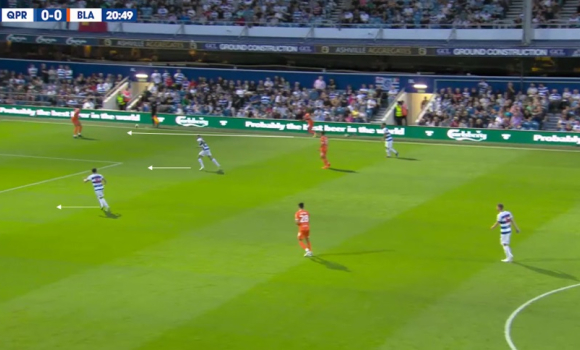
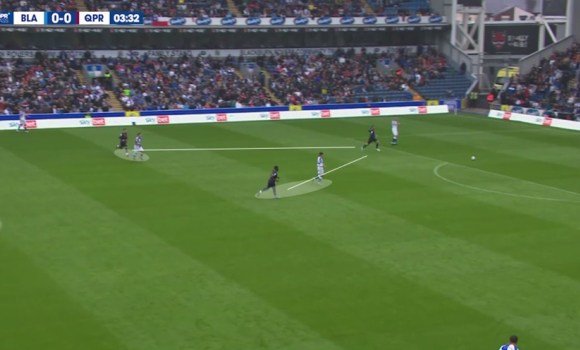
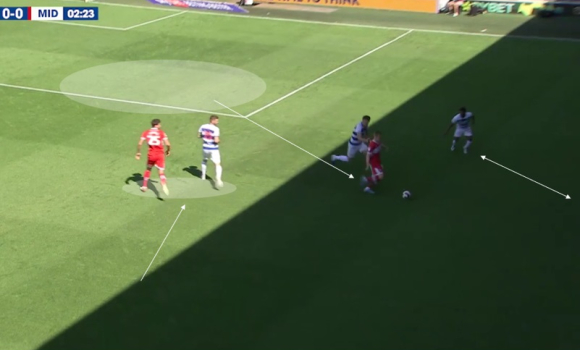
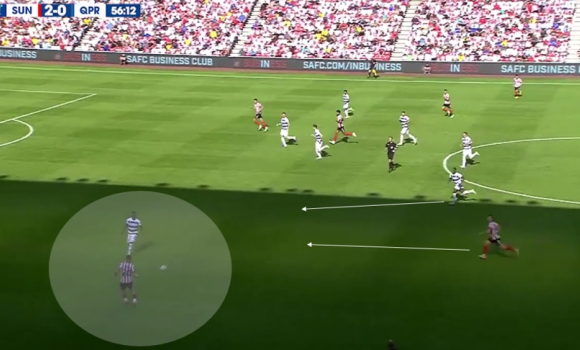
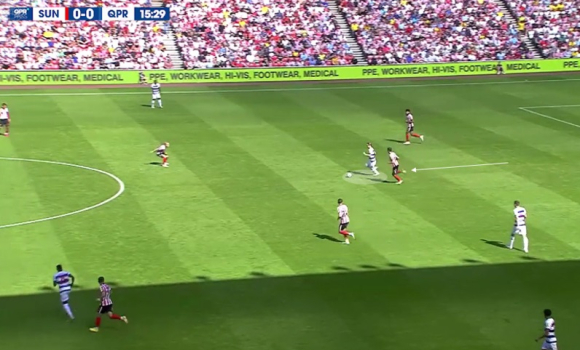
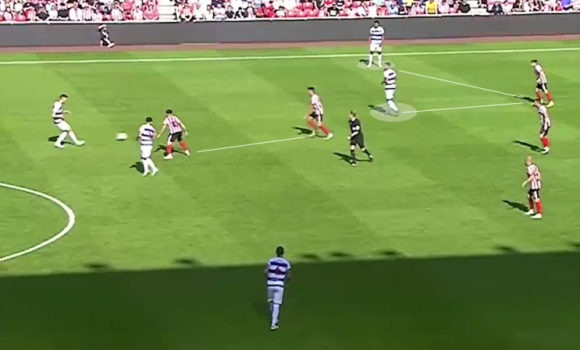
Another variation of a defensive rotation was through just the no.10 and FB working together in tandem to rotate and provide cover within the defensive shape when in individual 1v1s.
Defensive rotations have proved to be an effective way of stopping opposition from creating overloads or getting joy from creating space with combination play. Mobility/athleticism in these scenarios work in order to track the man and stay m2m but also by rotating the importance of keeping the shape together works, but also the compactness of the shape just by rotating positions. But from the three variations we’ve seen so far- it’s been impressive to see the different combinations working in tandem together whilst looking relatively compact out of possession. 3 - Creating Overloads in build-upWe saw even in pre-season one of the first patterns of play under Beale was the way he created overloads in the build-up phase by dropping Johansen as the 6 both in between/outside the CBs. But Beale has showed different variations by using the wide no.8 to drop outside the CBs to form an asymmetric back three. It certainly helps beat the press by adding a +1 in build-up but Beale has shown flexibility with the way he uses the overload in different variations.
But from the use of Dozzell dropping into the full back areas, it also brought some dilemmas with pushing the FBs high, tucking the CMs inside and leaving a load of space in the full back areas for opponent teams to exploit on the far side.
As well as Dozzell or the right hand sided eight depending on who is playing there, Johansen as the 6 is an easy access point (screening the back four) to drop into the backline to create overloads in build-up.
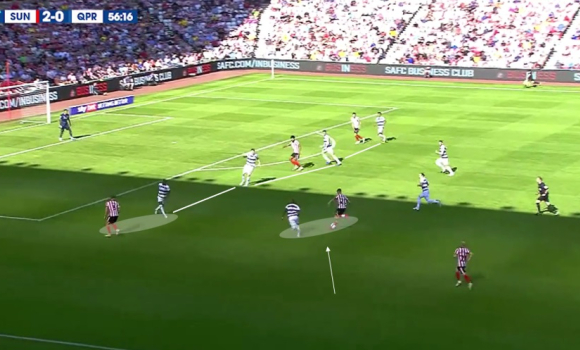
In terms of progression from build-up, we haven’t seen huge amounts unless it’s Rob Dickie driving at teams and stepping up into midfield so to see a different way to build-up using numerous midfielders, whilst pushing the full backs up to create width as a way to build is refreshing. I think, with a keen eye it will be interesting to see in any coming games if teams try to completely isolate Johansen out the game. We saw against Sunderland they did it to an extent, but not throughout the whole game. 4 - Positional overloadsFrom the first four league games I haven’t seen huge amounts of structural patterns from an attacking POV. We seem more of a transitional side from regains/turnovers but in possession we look to play through individual quality through the likes of Willock, Roberts and Chair. I think the game against Blackburn showed that despite it being our first competitive game, there wasn’t huge structural moves going forward so Beale’s fluid final third does suggest a reliance on freedom with individuals.
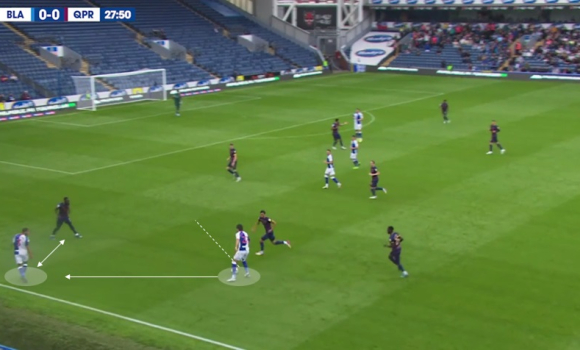
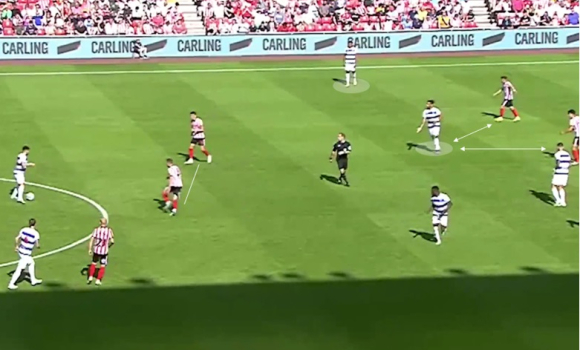
With the importance of the full backs in Beale’s system, providing both height and width, there’s no surprise to see a recurring theme with the ball near full back providing width for positional overloads.
As well as the FB hugging the touchline to provide width and height is a recurring theme, it seems to be a combination of players situating themselves between the lines and pulling off the opposition presser’s blindside that also helps to execute this.
Just from this example in one game for Laird it shows his tactical intelligence alongside new signing Tyler Roberts to create positional overloads and even rotations. Beale has said in interviews that some of the attacking identity within this team is through combinations in wide areas, so with the added quality of Laird, the overloads down the right should hopefully be as fluid as Chair and Willock down the left. In terms of positional overloads, they help us to create attacks mainly in the wide areas by pinning opposition players or through the use of movement. The repetition of the pattern can show how the lack of discipline of one opposition player can have a knock-on effect for the defensive unit or defensive shape out wide, in this instance, to stop the penetration of our attack. We have shown good execution to overload teams numerically or cause problems through positional dilemmas in the opening league games. So, Rangers have come away with five points from the first five games and there are clear patterns emerging within a Mick Beale side. More emphasis on wide combinations/overloads, defensive rotations, creating overloads in build-up and a more compact and defensive shape as we have looked more secure out of possession compared to last season. The early signs are promising, and of course there are still teething problems, but with time we might see more patterns emerging or improvements on what’s already occurring. Links >>> More like this at Dan’s SubStack >>> R Generation interview with Dan and Andre Dozzell If you enjoy LoftforWords, please consider supporting the site through a subscription to our Patreon or tip us via our PayPal account loftforwords@yahoo.co.uk. Pictures — QPRPlusPass The Twitter @DanLambert_ Action Images Please report offensive, libellous or inappropriate posts by using the links provided.
You need to login in order to post your comments |
   Blogs 30 bloggersPolls |
 By continuing to use the site, you agree to our use of cookies and to abide by our Terms and Conditions.
We in turn value your personal details in accordance with our Privacy Policy.