Please log in or register. Registered visitors get fewer ads.
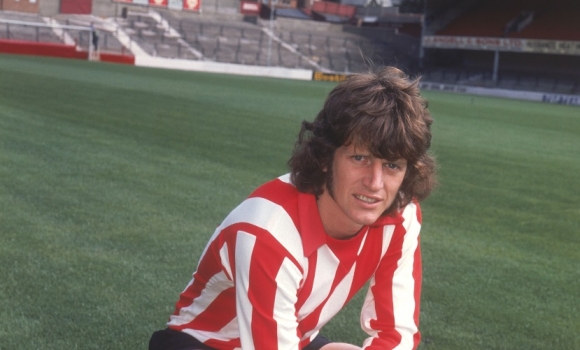
RIP Martin Chivers A Southampton FC Legend
Wednesday, 7th Jan 2026 19:06

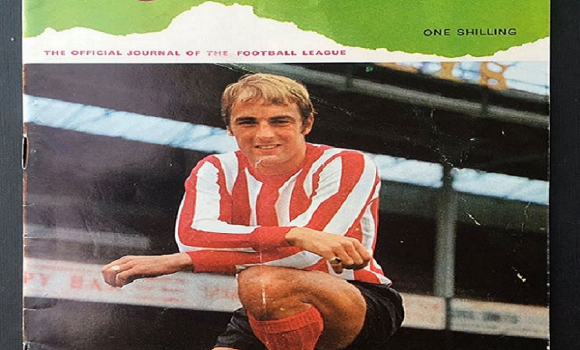
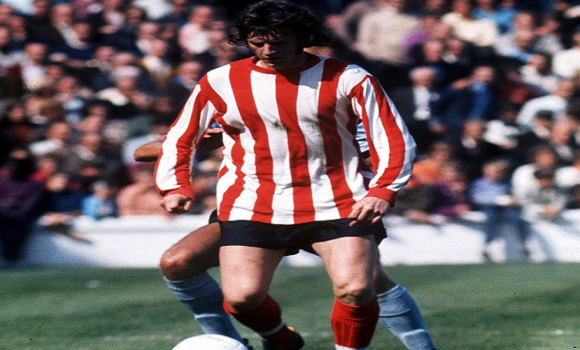
Most football supporters of a certain age will remember the name Martin Chivers, but the majority will recall him for his time at Tottenham Hotspur and also playing International football for England, but he was born in Southampton and played a big part in Saints rise in the 1960's.

Southampton supporters of a past generation will be mourning the passing of Martin Chivers who died today 7th January 2026

Before I start this article I must give much of the credit for this article to Southampton FC historian Duncan Holley and his excellent Saints website saintsplayers.co.uk without Duncan's work over the past 40 years in documenting the history of this club and it's players, the names of Martin Chivers and other great players who have graced the famous Red & White Stripes at both The Dell & now St Mary's would be lost to the younger generations.

I would urge every Saints supporter to pay a visit to the site, it is a mine of information about this football club and it's players.

saintsplayers.co.uk tell us that Martin was born in Southampton on 27th April 1945 to a German mother who arrived in the City after World War 1 and a father who worked in the Docks, you can't get much more Southampton roots than having a Dad who was a docker.

He went to School at Richard Taunton's, then a grammar school and wrote to Saints for a trial.

He impressed in the trial and in games for the club's nursery side and signed as a professional in September 1962, making his debut in that same month aged just 17 against Charlton Athletic at the Dell in a game won 1-0, although he was not on the scoresheet that day.

His impact however would not be instantaneous, he would play just 3 games that season in the old Second Division and it would be April 1963 before he would get his first goal for the club, the consolation goal in a 4-1 defeat at St James Park to Newcastle.

But if his first season was slow, his second would be his breakthrough, in 1963/64 he after breaking into the side in November he would end the season with 28 appearances yielding 21 goals, no one scored more and only Terry Paine equalled that total.

Saints were now building a side to win promotion to the First Division under Ted Bates, in 1964/65 they finished 4th with Martin playing 39 games and scoring 19 times,

But it would be 1965/66 that would see him and Saints have their finest hour so far with Chivers 30 goals in 39 games firing Saints to that long sort after promotion to the top flight of English football for the first time.

For 1966/67 Saints had signed Ron Davies who took much of the plaudits scoring 37 goals in his first season for Saints, but Martin had adjusted his game and was an ever present, turning provider more than scorer with 14 goals.

With the emerging Mike Channon breathing down his neck and with the big clubs starting to take an interest, Martin would play 28 games in the League and score 13 goals, before he was sold to Tottenham Hotspur for what would be classed as a British transfer record at the time, a fee judged to be £125,000 (Frank Saul in part-exchange, plus £45,000)

Such was the way that players were bought and sold by clubs on a whim, rather than the player dictating the transfer destination, when he was questioned at half-time during the New Year’s Day fixture 2020 he recalled the first he knew he was leaving The Dell when he was walking through Southampton High St and he saw the billboard outside the Echo office saying “Chivers to Spurs”.

His final stats for his hometown club read

174(1 sub) League appearances - 96 goals
7 FA Cup Appearances - 4 goals
8 League Cup Appearances - 4 goals

Total 189(1) appearances - 106 goals.

However it would be at Spurs where he really shone, scoring around 200 goals in 400 odd appearances in all competitions.

He also played for England 24 times and scored 13 goals, no mean feat given that in his time in the squad in 1971-73 it was hard to get a cap under Alf Ramsey.

He left Spurs in 1976 having just turned 31, joining Servette (Switzerland) in the july of that year, he joined Norwich in Jul 1978, ironically making his debut at Carrow Road on the opening day of the season against none other than Saints and he rubbed it in by scoring the 3rd goal in our 3-1 defeat.

He did not last long at Carrow Road, joining Brighton in March 1979, helping then to promotion before drifting into non League football in 1980.

For a while he owned a hotel in Hertfordshire and topped up his income with media work, mainly concerning Spurs but occasionally Southampton.

Sadly his time at the Dell does not seem to be mentioned in footballing circles, sadly he never really talked much about Southampton after his departure, even when being interviewed on the pitch prior to a game against Spurs in 2020, he was brutally honest, saying that he was very much a Tottenham man.

Perhaps because he rarely returned to his home City, at least not in a public capacity, he may well have visited relatives in the area, his name is largely forgotten by those Saints fans who are under the age of 60, whilst the names of Mike Channon, Ron Davies and Terry Paine, contemporaries in the 1960's are remembered and revered by a younger generation, Martin Chivers will be remembered mainly by supporters of Tottenham Hotspur today.

That is a little sad for Southampton Football Club, as between 1962 & 1968 he was an idol to many at the Dell.

All Photos Via Reuters


Please report offensive, libellous or inappropriate posts by using the links provided.


Bowlercow added 19:48 - Jan 7
Chivers was the first named player to be sold by Saints after I became a Saints fan
I can also remember him playing for England alongside Channon
Imagine a striker that gets 95 goals in 174 games His value today would be in the hundreds of millions
Thanks Martin. RIP
3

bryanK added 20:08 - Jan 7
Great player. Prior to signing Ron Davies he was instrumental in helping us gain promotion to the top flight. Lovely memories of the run in 12 games unbeaten including a really special night at Brisbane Road and a draw that effectively sealed promotion.
Beat Wolves 9-3 at the Dell which was unreal. Mind you we signed the Wolves goalkeeper Dave McClaren the following season typical Saints.
His time at Tottenham where he improved no end, he was extremely quick for such a big man although the makeshift in the deal coming to Saints Frank Saul left a lot to be desired. RIP Martin. As a footnote best wishes to Kevin Keegan in his fight against the big C.
3

OoohTerryHurlock added 20:20 - Jan 7
Rest in Peace Martin Chivers, and thoughts are with Kevin Keegan.
3

Knibbo7 added 00:15 - Jan 8
Disgusting that Saints posted nothing about this. Sums them up. (Last checked at 8pm)
0

saintpete01 added 13:07 - Jan 8
R I P MARTIN what a gentleman
What memories as a very young saint I was with
My dad walking along the pitchside at the Dell when Martin Chivers was on
The pitch getting extra practice the Ball rolled to the pitchside
By my Dad who sent in a perfect cross which Martin whacked into the Goal
My Dad never stopped mentioning his perfect cross R I P Dad
2

SanMarco added 21:53 - Jan 8
Always seemed like a decent guy. RIP
0


You need to login in order to post your comments

Blogs 31 bloggers

United by Football, Divided by Race? Swansea City’s Asian Footballers and Racism in British Football by KeithHaynes
Harrison who is studying towards a media qualification has written a very interesting piece on racism in football. It’s a very clear and well documented report. Follow him on X. @HYE15h.

Football is often seen as a sport with a unique power to bring people together, connecting people from all over the world with different cultures, races and religions. 128 nations have featured in the topflight of English football, including 12 Asian nations. I have seen for myself how football connects people who otherwise have little in common through my support of Swansea City. These connections are epitomised by an exchange I had with South Korean tourists during a visit to London in August 2015. My three brothers and I were wearing our Swansea shirts, which South Korean tourists recognised because the South Korean captain, Ki Sung-yueng, was playing for our team. We connected over our shared admiration for Ki before having photos together.

However, despite the unity football creates, racial incidents challenge the belief that football is a game for all. Kick It Out data shows there were 1,744 reports of discrimination, a record high last season, whilst racism reports against South Asians increased by 100%. This season we’ve already seen racial abuse allegedly directed at Swansea City’s Ji-Sung Eom during a game against Millwall. Former Swansea British Asian player Yan Dhanda was also subjected to racist messages online in 2021. Ki’s experience of racist chanting in Scotland in 2010 before joining Swansea shows that racism against Asians in British football is not a new phenomenon. In light of these incidents I will analyse the impacts of racial abuse against Asian players and football more widely, and ask if enough is being done to stop it.

There are a multitude of different impacts from racial abuse within football, most notably the damage to player welfare. Yan Dhanda talked about the hurt he felt in the aftermath of his attack, stating how it affected both his family and how he was in training. Research by Osinnowo Kolawole reveals how the long-term emotional damage of racism is often unseen, affecting both personal lives and their performance. Racism can also lead players to question whether they want to continue playing football, as seen with Danny Rose. Osinnowo further states how racial trauma can lead to deep internal conflicts, with players altering their appearances to conform to white norms in football. For Lee Chun-Soo a former South Korean international footballer racist abuse left him with a desire to build a larger physique as a way of preventing further abuse. He believes the racial stereotypes about Asian players being small and weak results in a reluctance to recognise Asian players as equal competitors. This provides an example of an Asian player having to change who he is to be accepted into the sport, Lee and other victims of racism state how it can lead them to question their sense of belonging in the game. Premier League video content creator Kevin Yuan often faces racist abuse when filming at UK stadiums, despite living in the UK and following football since 2008, he states how he “feels like a foreigner, like I don’t fit in”.

This challenge to a player’s sense of not belonging within the game has also had a severe impact on Asian participation with football in Britain, with just over 1% of professional players being of South Asian heritage. Whilst there are many factors which underpin this underrepresentation, racial abuse definitely plays a role. Research by Dr Stefan Lawrence reveals that overt racism within football academies from other players, makes British Asians feel like outsiders. Yan Dhanda talks about how during his time in football academies he was always told he wouldn’t make it due to his Asian background. For other Asian players lacking self-belief and support, abuse can prevent progression. Separate Asian teams and leagues have emerged in direct response to racism; these are seen as safe spaces for Asian players. Dr Lawrence has found that these separate teams and leagues do not have the same level of exposure as mainstream leagues, whereby they aren’t seen by scouts as repositories of talent. Furthermore, the lack of professional Asian players as role models not only limits young Asian players’ beliefs, but also limits coaches’ and scouts’ beliefs in what Asian players they are assessing could become. Seeing the few professional Asian players subjected to racial abuse risks discouraging the next generation from pursuing football.

To combat racism in British football, a range of initiatives have been implemented by the leagues, clubs and organisations such as Kick It Out and Show Racism The Red Card. Whilst reports of racism are at a record high, this doesn’t necessarily mean that there is greater racism within football. More reports against racist abuse suggest people are more willing to report racist abuse when they see it, standing up to racism. Since 2022, Kick It Out has run fan education programmes for 500 fans referred by clubs or police, with a reoffending rate of just 1.25%. This shows the impact education can have in tackling racism. However, with 792 reports of racism in 25/26 season alone, many more of these programmes are needed to cover all the perpetrators of racist abuse. An increase of reporting by the media in highlighting racism within football can also be seen. For example, Sky Sports’ “Football’s Hidden Talent” series highlights the racism and inequality South Asians face in football. The racist incident against Ki in 2010 only making the local newspaper, compared to the nationwide and international coverage of the racial abuse against Eom, shows the heightened media coverage of racism in football. Whilst attitudes towards tackling racism have seemingly improved, there are still drawbacks. On-pitch protocols in dealing with racist abuse which were followed during the incident with Eom led to a 7-minute break in play, which afterwards was criticised by the Millwall manager for “killing the momentum”. Such comments were heavily criticised within the game for prioritising momentum over player welfare.

An increasing number of Asian players in British football has coincided with Asians taking up a greater share of racism victims. Whilst more people are willing to report racism within the game, this has only revealed the great scale to which racism remains deep rooted in the game. In addressing this problem, harsher sanctions against perpetrators are needed. Cracking down on racism is crucial in addressing the underrepresentation of Asian players in professional football. The lived experiences of Asians in British football expose inequalities in who feels they belong within football. Football should be a game for all, with everyone equally included, whilst it connects so many, in its current state too many are left out.

Swansea City has been at the forefront of taking action against racism within football. It was the first club to stage a social media boycott in April 2021 after abuse against Yan Dhanda, Ben Cabango and Jamal Lowe. A second boycott, which Swansea City participated in later that month involved other clubs and sports organisations across the world, representing a combined following of 1.7billion.

Swansea City’s resolute actions against racism are reflective of one of the club’s strategic pillars ‘Cymdeithas’, which places the community, togetherness, and belonging at the heart of the club’s identity. It is an ethos that extends beyond the football pitch reflecting the importance of creating an environment in which everyone feels welcome and valued. The unwavering support shown towards Eom by the Jack Army in the aftermath of the alleged racist abuse he experienced, provides an illustration of these values in practice.

Ultimately this piece has sought to highlight the very real and immediate impact that racial abuse can have on footballers, and why such behaviour cannot simply be dismissed, ignored, or accepted as part of the game. Eom Ji-sung’s experience is not an isolated incident, but forms part of a wider history of racial discrimination experienced by Asian players within football, including those who have represented Swansea City. While the club’s response and the unwavering support shown by supporters towards Eom provide encouraging examples of what football can represent at its best, there remains much work to be done in the fight against racism.

My best wishes go to Eom, with the hope that the support of Swansea City and the Jack Army remains far louder than the abuse he has faced.


Bibliography
Premier League, 13 September 2025,
https://www.premierleague.com/
Sky Sports, 31 July 2025, https://www.skysports.com/foot
Andrew Raeburn, BBC Sport, 14 October 2026 https://www.bbc.co.uk/sport/fo
BBC Sport, 11 February 2021, https://www.bbc.co.uk/sport/fo
The Courier, 2 November 2010 https://www.thecourier.co.uk/s
Swansea City AFC, 18 February 2021,
Swansea City AFC, 8 April 2021, https://www.swanseacity.com/ne
Swansea City AFC, 13 May 2021, https://www.swanseacity.com/ne
Osinnowo, Kolawole, 2024, Exploring the Experiences of Racial Trauma among Footballers. https://uhra.herts.ac.uk/id/ep
BBC Sport, 4 April 2019 https://www.bbc.co.uk/sport/fo
Lee Chun-Soo, 23 October 2026,
Nizaar Kinsella, BBC Sport, 20 November 2024, https://www.bbc.co.uk/sport/fo
Kick It Out, 30 September 2026, https://www.kickitout.org/site
COPA90, 24 January 2019,
Gareth Vincent, BBC Sport, 12 November 2020, https://www.bbc.co.uk/sport/fo
Sky Sports News, 25 May 2024,
Sky sports, 31 July 2026, https://www.skysports.com/foot
Kick It Out, 30 September 2026, https://www.kickitout.org/site
Sky Sports News, 25 May 2024,

Southampton Polls

About Us Contact Us Terms & Conditions Privacy Cookies Online Safety Advertising
© FansNetwork 2026