
QPR head back Down Under for Macarthur’s Kealey Adamson – Signing Sunday, 29th Jun 2025 16:42 by Clive Whittingham and Greg Spires QPR continue to shop Australian, with Macarthur’s 22-year-old right back Kealey Adamson joining Daniel Bennie and Jaylan Pearman at the club for an undisclosed fee. FactsKealey Adamson is a 22-year-old Australian right back who is signing from A-League side Macarthur Bulls for an undisclosed fee, said to be in the region of £250k and a three-year contract. He will officially join QPR on July 1. From St Leonards in New South Wales, he came through the ranks at Sydney FC and played for their U21s in Australia’s second tier before he made his senior debut for them in the 2023 Australia Cup. They won the trophy that year, beating Brisbane Roar in the final, and he finished with 19 appearances in the senior side. His performances there quickly saw him picked up by Macarthur with whom he repeated Australian Cup success in 2024, beating Melbourne Victory in the final. He made 13 A-league appearances that season. In the most recent 2024/25 campaign he started 25 times and made one sub appearance (ever present) the A League, scoring against Brisbane Roar and Adelaide United. His performances saw him awarded the clubs’ Macaurthur Medal as their outstanding player of the season. He has two caps for Australia at U23 level. Analysis @Greg_SpiresAs QPR dip into the Australian market once again, the arrival of Kealey Adamson raises lots of questions from fans as a relatively unknown entity. A player I watched on occasion in the 2024/25 season, and wrote a scouting report on in January, there’s certainly potential to his game. Here’s what R’s fans can expect from our latest import from down under… Defending & Physicality When describing Adamson as an ‘athletic’ player, let me explain what I mean. While he has the physical capacity to work up and down the field, covering ground constantly, he also has the ability to adapt his feet or body to change direction quickly. Flipping his hips to change direction is essential for full-back positions and Adamson possesses the physical capabilities to defend effectively. While Adamson isn’t rapid, he has enough pace to match most wingers and strides into wider areas to deny space in a smooth manner. For me, his 1v1 defending will require some work if he’s to be a competent Championship full-back – especially his habit of getting squared up and being baited by wingers who change pace. He tends to be beaten on his inside shoulder by attackers too, although this appears to be commonplace for the majority of modern full backs that face the ‘wrong-footed winger’. Adamson showed a strong defensive capability in terms of reading the game, anticipating and interjecting to halt opposition attacks. The nature of the A-League is quite transitional and basketball-esque, where his physical and defensive capabilities were tested. While I am a massive fan of the entertainment and players the A-League produces, I’ll be interested to see how he handles more settled and technically demanding games in the Championship. At roughly six feet tall, Adamson is perfectly placed between Kenneth Paal and Jimmy Dunne when it comes to aerial prowess. Capable of challenging aerially, and brave enough to do so, but lacking the explosiveness and physical dominance to be considered an aerially dominant defender. In-Possession Adamson has spent the majority of his playing career as a right-back but was deployed further forward in the second half of the 2024/25 season due to the departure of starting right-midfielder/wing-back Jed Drew. Adamson has a good technical base; showing composure on the ball, and an ability to understand and execute a variety of first touches to evade pressure. When pressured by opposition full-backs he drives in-field and is effective at evading pressure with sharp burst and quality close control. He has capabilities to pass and cross off his left foot, which is an option he often takes when driving inside as the options open up to him. Furthermore, Adamson is capable of varying his crossing and found greater success with floated deliveries to the far post zone. He has a tendency to loft crosses with little whip on the ball, making them easier to judge for defenders and to claim for goalkeepers, so there is an opportunity to work on his whipped crossing technique for me. He is a capable long passer, often hitting passes into front or into space beyond the defence - depending on the movement of his attackers. He has better execution on balls into front than into the channels however, he has shown a resilient nature to hitting a plethora of long passes despite mixed quality. The greater speed and intensity of the Championship will certainly test his capability to handle pressure and pass & receive with technical quality – which I believe Adamson has the potential to show if given time to settle. How does he fit in at QPR? Whilst it’s clear that Jimmy Dunne will be first in line for minutes at right-back for the forthcoming season, Adamson can play an important role as an understudy through hectic periods of the season. A player that has tactical flexibility during build-up (inverts, pushes high or drop deep) which allows the team to set up in different ways and problem solve during build-up to a greater extent. He will offer more dynamism along with totally contrasting qualities to Dunne and I think the coaching staff will enjoy working with Adamson because of the high floor that he already has - built upon athleticism, fearlessness, and intelligent play. 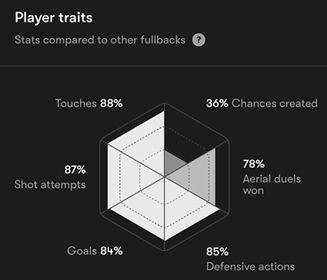 Data Comparison of Adamson vs A-League full-backs, courtesy of FotMob.com. We have seen with other signings that there’s a requirement for patience, especially those moving across the world at a young age and trying to step up a level. I believe Adamson has a high floor and there are traits in his game that will translate well to the Championship with potential to make him an impactful player for QPR beyond this season. I’d be surprised to see him given a prominent role this year, but the Stéphan regime may take us down an unforeseen path with Adamson seeing more minutes than all of us expect. For a rumoured £250k fee, there is certainly a low risk, high (potential) reward feel to the transfer. Overall, Adamson should be a player that fans are patient with and rally behind – which I am confident they will. Reaction“QPR is a massive club and an old club with lots of history. Even in Australia, I feel everyone knows who QPR is. It’s a really attractive club, really well supported and the list goes on. I’m just keen to hit the ground running and get to work. I like to think I'm a very modern right-back. I'm lucky I've got an engine, I've got pace to be able to get forward, join the attack a lot when I can and still be able to come back and be disciplined in defence. So, I feel that work-rate is the biggest thing you're going to get. I'm going to be at both ends of the pitch and hopefully you'll be seeing two of me on the field.I'd heard a lot of good things from afar, but I think since having touched down, seeing the facilities, meeting the staff, meeting all the support network around the first team, I think it's just super clear to see how I'll be able to grow my game and how other players have grown their game in the past.” Kealey Adamson “He's a massive QPR fan. I was keeping up to date with the results even before I knew there was any interest because he would just come into the changing room watching the end of games, watching highlights, so I feel like really there was a connection without me even knowing it. I told him a little bit about the interest and he goes: ‘You're going, you're going, you're going!’ He was very excited.” -On the influence of his former Macurthur team mate, Ollie Jones (hi Ollie!) “We are delighted to be able to welcome Kealey to the football club today. He was the stand-out right-back in the 24/25 edition of the A-League. With an elite level of athleticism, we are excited to continue to help develop his qualities within our setup.” -Christian Nourry Opinion – Network Ten’s Simon HillWhen the A League returns for its 21st season it will do so without the voice of Simon Hill for the first time. The British-born commentator has become the voice of the A League on SBS, Fox Sports and more recently Network Ten, commentating on the game in Australia for the last 22 years and covering the last 16 grand finals. He is now preparing to return to the UK. You can read more about his fantastic career Down Under here. We were delighted to catch up with Simon this week for his opinion on QPR’s most recent recruits from Australia… “Jaylan Pearman is a promising young talent, who has got a great touch, an eye for goal, and can assist too. He emerged this (last) A-League season, but really, he is still very raw. At 19, I see him as a project player for QPR - in the mould of Daniel Bennie. I think he has gone over too early to be honest, and could have done with another year in Australia to develop, but this is the way it is with these young kids - 80% of which (according to some research a few years ago), end up back in the A-League within two years of going overseas. Is Pearman different? Possibly. But with only half a season under his belt, it's impossible to know which way it'll go. He's certainly got the ability, but has he got the physicality and mentality to succeed? I am guessing he'll work more with your development squad and maybe head out on loan at some point. “It's worth bearing in mind with Pearman, that another young star - Garang Kuol - about whom there was a LOT more noise, headed over to Newcastle United two years ago, and has almost disappeared without trace. I think he is back in contention now, but it's been a long hard road for him. Aussie kids generally are a bit green about the ways of the football world - it's a different generation to the Cahill's, Kewell's & Viduka's...they can get lost overseas, get homesick, and end up coming back to Australia to relaunch their stalled careers. I hope that won't happen with Pearman, but I guess that is up to him. On the other hand, I think Kealey has a real chance of building a good career with QPR. He's had two full seasons of pro football with Macarthur, and has developed well under Mile Sterjovski (his coach at Macarthur, who played at the 2006 World Cup, and briefly in England with Derby County). He is an aggressive, attacking right full-back who has a great engine, doesn't mind a tackle, and gets involved in the build-up - often by drifting inside to make an extra midfielder. I have no qualms about his physicality to handle the Championship. The only issue with many Aussie kids is the amount of games - in Australia, they'll play no more than 30 in a season, whereas in Europe they could play 50-60 matches in all comps. That can be tough on the body, and they need time to adapt, especially on heavy pitches and in winter weather the Aussies aren't used to (we play in summer in Oz). “He came through at Sydney FC, which is an Academy programme that has produced a LOT of good young talent in recent years - the Portsmouth duo of Adrian Segecic & Hayden Matthews both came through that programme, and there are others like Jake Girdwood-Reich (now with St Louis in MLS) - in total, an article reckoned the Academy had produced 61 players who went on to win pro contracts, which for an A-League club is quite something. “Adamson played in their Australian Cup winning team of 2023, but was in direct competition at Sydney for a contract with a kid called Zac De Jesus - Sydney went with De Jesus (ostensibly because he was a bit younger), but I reckon they'd admit they made the wrong choice. De Jesus has struggled to establish himself - Adamson took his chance at Macarthur. “He has an interesting background - his dad is Tanzanian, his mum is Irish - and his parents really had to scrape around for the fees required for him to play as a kid, so that's why I think he's got a real chance. He's not had it easy, but he's a gutsy fella, who won't die wondering.” ContextThere are always themes which develop through a summer set of these signing pieces and the first is how this is all going to fit together into a team. As we recalled in the Mbengue piece, there were individual success stories among QPR’s summer 2024 intake but they didn’t add up into a functioning Championship team so we’ve got to improve on that this summer. Coherent team building, not grabbing at shiny individuals. Julien Stéphan has a reputation for pragmatism and working with what he’s got. Apart from regularly picking two up front he doesn’t seem closely wedded to any particular formation or style. The old school among the support immediately seized on a fondness for 4-4-2 in our piece with the French journalists last week, but you’d be bold to pick that here with our midfield and it doesn’t really suit a squad packed full of players who want to play ‘ten’. In defence he’s used both a three and a four and that’s going to be interesting per our recruitment so far. Jimmy Dunne has been surprisingly retained when it looked for all money like he’d be off – has that been done with the idea of him continuing at right back in a four, as one or two centre backs where he has been a bit ropey in the past, or on the right side of a back three? And which of those roles is Amadou Mbengue earmarked for, as a more athletic and pacey version who can play all three of those positions. Jake Clarke-Salter and Ronnie Edwards both showed how our team transforms when we’ve got a defender who can carry the ball out so you’d think the Reading man is going to be pretty key. Liam Morrison impressed last season, there are doubts over how much Steve Cook is going to feature after his injury and begrudging “captain refuses to leave” statement of him taking up the option on his contract. Add into that equation Kealey Adamson, a much more attacking full back or wing back than we’ve been used to of late. I very much doubt he’s been brought here as an immediate starter, but at 22 he’s not a development squad signing by any means. With Kenneth Paal released it feels like we’re trying to change the profile of our full backs and go much more attacking from there on both sides. And pace. The jungle drums so far are that Ziyad Larkeche will get a go at replacing Paal wide left after a decent loan at Dundee, but I can’t see us risking it going into a season with him and Esquerdinha as our only two options there. Another theme is whether we’ve learned lessons from last season. In the positive column here, Adamson is athletic, so along with Mbengue and Poku it seems that we’ve finally, after several summers, decided to make a concerted effort to put some physicality and pace back into this team. We need to find ways of getting the ball further up the field and pacey players carrying it forward is one way to do that. Particularly in wide areas. This is a very welcome development. In the negative, perhaps being harsh, but this signing has a big touch of the Hevertton Santos about it for me. Another ‘attacking’ full back, signed from an even poorer quality league than the one Santos was playing in where, at most, you play 30 games a year. All the positives about Mbengue being robust, aggressive, experienced in three-game weeks, couple of EFL winters under his belt, do not apply here. The Championship and the A League are worlds apart, and it’s interesting we’re picking up prospects from there at the current rate. But then if you can’t say anything nice… let’s instead focus on the issue of the ‘Brexit tokens’ which QPR are currently juggling - it’s worth following @GBEEpertHub on socials or his blog here who’s been doing a lot of analysis about how QPR are working with this system on both player and manager recruitment at the moment. To sign players from abroad post Brexit they have to qualify for an International Sportsperson Visa under the FA’s Governing Body Endorsement (GBE) rules. There’s a points system based on appearances, the level played at, international caps and so on, and players have to be at 15 points or more to get a permit. The good news is this has opened up the rest of the world to English football – much easier to sign players from Latin America than it ever was before, for example. However, the Premier League complained it would restrict them from picking up promising young prospects from round the world who haven’t been playing long enough to accumulate those points, while the Championship were concerned that the level of player they’re looking at to come and play second tier football meant they often wouldn’t meet this criteria – Lucas Andersen, for instance, didn’t make the 15 points despite being around for years and in his 30s. More on him to come. You can all have the political debate about this being the whole point of the exercise – more British players in more British squads, less immigration, etc etc on your own thanks. The solution, from June 2023, was each club in the top two division gets four slots for players who don’t qualify - Elite Significant Contribution (ESC) slots. Premier League and Championship clubs can have a maximum of four ESC slots, while League One and League Two clubs are limited to two. Once signed you can bring the players off the ESC exemptions by them hitting the 15 points while they’re with you or playing them in more than 50% of your games. The criteria for qualifying for an ESC is typically fuzzy, although there is vague reference to the club having to evidence the player is an elite player and will make a significant contribution to the sport. You can help show this by them playing at least one competitive youth or senior international for a top 50 ranked nation, or five games at either level for a country outside the top 50, played in at least one continental competition game (Europa League, Conference League, Copa Libertadores etc), or at least five domestic competitive games. Now clubs don’t have to reveal who’s on and off quota, and if you don’t have to reveal it you can be sure as fuck QPR won’t be revealing it, so much of the following is guesswork and it’s quite possible some of these Australians have British parentage and so on but on the face of it… QPR have been using this system extensively under Christian Nourry. With Jaylan Pearman and Daniel Bennie already here Adamson I think makes it a full quota of four including (probably, though again we can’t be sure) Zan Celar. It’s one of the reasons Lucas Andersen had to go, so we could do this deal – that and he can’t run any more. Three of those four are not first team players - certainly you would think unlikely to make the 50% appearances necessary to come off the quota this year – so to take up a loophole that you can use for first team players on development prospects is certainly an interesting strategy. If you enjoy LoftforWords, please consider supporting the site through a subscription to our Patreon or tip us via our PayPal account loftforwords@yahoo.co.uk. Pictures - Reuters Connect Please report offensive, libellous or inappropriate posts by using the links provided.
You need to login in order to post your comments |
   Blogs 31 bloggersUnited by Football, Divided by Race? Swansea City’s Asian Footballers and Racism in British Football by KeithHaynes Harrison who is studying towards a media qualification has written a very interesting piece on racism in football. It’s a very clear and well documented report. Follow him on X. @HYE15h. Football is often seen as a sport with a unique power to bring people together, connecting people from all over the world with different cultures, races and religions. 128 nations have featured in the topflight of English football, including 12 Asian nations. I have seen for myself how football connects people who otherwise have little in common through my support of Swansea City. These connections are epitomised by an exchange I had with South Korean tourists during a visit to London in August 2015. My three brothers and I were wearing our Swansea shirts, which South Korean tourists recognised because the South Korean captain, Ki Sung-yueng, was playing for our team. We connected over our shared admiration for Ki before having photos together. However, despite the unity football creates, racial incidents challenge the belief that football is a game for all. Kick It Out data shows there were 1,744 reports of discrimination, a record high last season, whilst racism reports against South Asians increased by 100%. This season we’ve already seen racial abuse allegedly directed at Swansea City’s Ji-Sung Eom during a game against Millwall. Former Swansea British Asian player Yan Dhanda was also subjected to racist messages online in 2021. Ki’s experience of racist chanting in Scotland in 2010 before joining Swansea shows that racism against Asians in British football is not a new phenomenon. In light of these incidents I will analyse the impacts of racial abuse against Asian players and football more widely, and ask if enough is being done to stop it. There are a multitude of different impacts from racial abuse within football, most notably the damage to player welfare. Yan Dhanda talked about the hurt he felt in the aftermath of his attack, stating how it affected both his family and how he was in training. Research by Osinnowo Kolawole reveals how the long-term emotional damage of racism is often unseen, affecting both personal lives and their performance. Racism can also lead players to question whether they want to continue playing football, as seen with Danny Rose. Osinnowo further states how racial trauma can lead to deep internal conflicts, with players altering their appearances to conform to white norms in football. For Lee Chun-Soo a former South Korean international footballer racist abuse left him with a desire to build a larger physique as a way of preventing further abuse. He believes the racial stereotypes about Asian players being small and weak results in a reluctance to recognise Asian players as equal competitors. This provides an example of an Asian player having to change who he is to be accepted into the sport, Lee and other victims of racism state how it can lead them to question their sense of belonging in the game. Premier League video content creator Kevin Yuan often faces racist abuse when filming at UK stadiums, despite living in the UK and following football since 2008, he states how he “feels like a foreigner, like I don’t fit in”. This challenge to a player’s sense of not belonging within the game has also had a severe impact on Asian participation with football in Britain, with just over 1% of professional players being of South Asian heritage. Whilst there are many factors which underpin this underrepresentation, racial abuse definitely plays a role. Research by Dr Stefan Lawrence reveals that overt racism within football academies from other players, makes British Asians feel like outsiders. Yan Dhanda talks about how during his time in football academies he was always told he wouldn’t make it due to his Asian background. For other Asian players lacking self-belief and support, abuse can prevent progression. Separate Asian teams and leagues have emerged in direct response to racism; these are seen as safe spaces for Asian players. Dr Lawrence has found that these separate teams and leagues do not have the same level of exposure as mainstream leagues, whereby they aren’t seen by scouts as repositories of talent. Furthermore, the lack of professional Asian players as role models not only limits young Asian players’ beliefs, but also limits coaches’ and scouts’ beliefs in what Asian players they are assessing could become. Seeing the few professional Asian players subjected to racial abuse risks discouraging the next generation from pursuing football. To combat racism in British football, a range of initiatives have been implemented by the leagues, clubs and organisations such as Kick It Out and Show Racism The Red Card. Whilst reports of racism are at a record high, this doesn’t necessarily mean that there is greater racism within football. More reports against racist abuse suggest people are more willing to report racist abuse when they see it, standing up to racism. Since 2022, Kick It Out has run fan education programmes for 500 fans referred by clubs or police, with a reoffending rate of just 1.25%. This shows the impact education can have in tackling racism. However, with 792 reports of racism in 25/26 season alone, many more of these programmes are needed to cover all the perpetrators of racist abuse. An increase of reporting by the media in highlighting racism within football can also be seen. For example, Sky Sports’ “Football’s Hidden Talent” series highlights the racism and inequality South Asians face in football. The racist incident against Ki in 2010 only making the local newspaper, compared to the nationwide and international coverage of the racial abuse against Eom, shows the heightened media coverage of racism in football. Whilst attitudes towards tackling racism have seemingly improved, there are still drawbacks. On-pitch protocols in dealing with racist abuse which were followed during the incident with Eom led to a 7-minute break in play, which afterwards was criticised by the Millwall manager for “killing the momentum”. Such comments were heavily criticised within the game for prioritising momentum over player welfare. An increasing number of Asian players in British football has coincided with Asians taking up a greater share of racism victims. Whilst more people are willing to report racism within the game, this has only revealed the great scale to which racism remains deep rooted in the game. In addressing this problem, harsher sanctions against perpetrators are needed. Cracking down on racism is crucial in addressing the underrepresentation of Asian players in professional football. The lived experiences of Asians in British football expose inequalities in who feels they belong within football. Football should be a game for all, with everyone equally included, whilst it connects so many, in its current state too many are left out. Swansea City has been at the forefront of taking action against racism within football. It was the first club to stage a social media boycott in April 2021 after abuse against Yan Dhanda, Ben Cabango and Jamal Lowe. A second boycott, which Swansea City participated in later that month involved other clubs and sports organisations across the world, representing a combined following of 1.7billion. Swansea City’s resolute actions against racism are reflective of one of the club’s strategic pillars ‘Cymdeithas’, which places the community, togetherness, and belonging at the heart of the club’s identity. It is an ethos that extends beyond the football pitch reflecting the importance of creating an environment in which everyone feels welcome and valued. The unwavering support shown towards Eom by the Jack Army in the aftermath of the alleged racist abuse he experienced, provides an illustration of these values in practice. Ultimately this piece has sought to highlight the very real and immediate impact that racial abuse can have on footballers, and why such behaviour cannot simply be dismissed, ignored, or accepted as part of the game. Eom Ji-sung’s experience is not an isolated incident, but forms part of a wider history of racial discrimination experienced by Asian players within football, including those who have represented Swansea City. While the club’s response and the unwavering support shown by supporters towards Eom provide encouraging examples of what football can represent at its best, there remains much work to be done in the fight against racism. My best wishes go to Eom, with the hope that the support of Swansea City and the Jack Army remains far louder than the abuse he has faced. Bibliography Premier League, 13 September 2025, https://www.premierleague.com/ Sky Sports, 31 July 2025, https://www.skysports.com/foot Andrew Raeburn, BBC Sport, 14 October 2026 https://www.bbc.co.uk/sport/fo BBC Sport, 11 February 2021, https://www.bbc.co.uk/sport/fo The Courier, 2 November 2010 https://www.thecourier.co.uk/s Swansea City AFC, 18 February 2021, Swansea City AFC, 8 April 2021, https://www.swanseacity.com/ne Swansea City AFC, 13 May 2021, https://www.swanseacity.com/ne Osinnowo, Kolawole, 2024, Exploring the Experiences of Racial Trauma among Footballers. https://uhra.herts.ac.uk/id/ep BBC Sport, 4 April 2019 https://www.bbc.co.uk/sport/fo Lee Chun-Soo, 23 October 2026, Nizaar Kinsella, BBC Sport, 20 November 2024, https://www.bbc.co.uk/sport/fo Kick It Out, 30 September 2026, https://www.kickitout.org/site COPA90, 24 January 2019, Gareth Vincent, BBC Sport, 12 November 2020, https://www.bbc.co.uk/sport/fo Sky Sports News, 25 May 2024, Sky sports, 31 July 2026, https://www.skysports.com/foot Kick It Out, 30 September 2026, https://www.kickitout.org/site Sky Sports News, 25 May 2024, Queens Park Rangers Polls[ Vote here ] |
 By continuing to use the site, you agree to our use of cookies and to abide by our Terms and Conditions.
We in turn value your personal details in accordance with our Privacy Policy.