Last second heartbreak for vastly improved QPR - Report Tuesday, 3rd Jan 2023 19:06 by Clive Whittingham The response to Thursday's nadir was there from QPR against Sheff Utd on Monday night, and until ten seconds from the final whistle so too was the result. There are ways to lose games of football. Queens Park Rangers know them all. If you’re a relatively recent convert, say only the last ten years or so, you’ll still have potentially seen Rangers concede six goals in a game on four different occasions. Yessir, we love one of those every now and again, where it all goes a bit J G Ballard. A proper, full on, public rectal prolapse, bleeding out across the pavement, neighbourhood dogs scenting the blood and shit, circling for the easiest hat tricks of their professional careers, while Rob Hawthorne commentates for the people at home. Straight from the kick off sometimes, let’s get a goal into us nice and early, establish our intentions and credentials right away. Good for the soul those ones. Remind us of our place in the world. Wouldn’t want the fucking QPR fans getting ahead of themselves would we? The last-minute heartbreak, the two nil home sludge-a-thon, the one where you try something that doesn’t work for an hour or so and then just think ‘fuck it, let’s get Matt Smith on’… Sometimes we go all Andie McDowell Pantene commercial with a “wild and crazy and out of control” 4-2 loss to Chesterfield when we’ve got a good team that’s heavy odds on favourite and they’ve got a team assembled by asking around on the Market Square that afternoon. Other times we just get whacked by an obviously better team, with better players and better coaches and better bank balances, and you just shrug your shoulders and have to admit it is difficult to beat a United States Navy Virginia-class nuclear submarine when you’ve only got a board with a nail in it. We do not discriminate by day, time or season — we lose at night and during the day, in the autumn, the winter, the spring and, on the one occasion Covid-19 made us play games there, very, very often in the summer as well. We really don’t like playing Friday night for some reason, but that doesn’t mean we don’t get our arse handed to us on the other days of the week as well. We lose to the team on the otherside of the Hammersmith Broadway, and Newcastle United, and to pretty much everybody else in between. Some teams we lose to more than others — Nottingham Forest away can be a bit like taking somebody with a nut allergy on a tour of the KP factory — but we’re very inclusive. Manchester City can beat us, as you’d expect Manchester City to do, but so can Stockport County, which can feel like a bit of a liberty. QPR are like Ticketmaster — they’re an organisation that exists for one thing, which they’re not very good at . If you’re going to chuck your toys out of the pram every time this club loses then said toys are not going to spending much time in said pram. If you’re going to stomp off and refuse to return whenever our not-so-Super Hoops underperform then you won’t be spending much time in W12 — you’ll be richer and probably happier for that, but who really wants that for themselves? Life’s not meant to be easy, this stuff is character building. Nevertheless, there was just something about the Luton debacle on Thursday night that flicked a switch for me, and a quite a few of the regulars in the Crown too. There have to be, at some point, some minimum standards on things like running about, putting the odd tackle in, competing physically with the opponent. For me QPR dropped below that against Burnley, and excused themselves because Burnley are obviously very good. Benefit of doubt given, to then do so again, when a large crowd had returned to Loftus Road regardless, in a grudge match against Luton Town who have all the same economic restrictions we do and more, had me going all 'you won’t like him when he’s angry'. I think we can both agree that I’ve put up with a lot in this marriage, but I found certain specific things that went on in that match unacceptable. Perhaps that opinion is coloured by the opponent. In my time following QPR I have watched Fulham, Crystal Palace, Brentford, Watford and others go past us, from pre-season friendly fodder to established Premier League teams, in new or redeveloped stadiums. Palace, fucking Palace, buy our best player now, and give him all that top flight football and international exposure we used to be able to offer their players here. We sit in the Crown now and watch Brentford, fucking Brentford, running the rounds of the kitchen through Liverpool. It’s getting old and, with a new stadium on the way and shit hot recruitment department in fine form, we’re now under the threat of watching poxy Luton bastard Town sail off into the distance as well. A Conference outfit a decade ago. Perhaps it was just me being a standard internet-age hyperbole merchant/twat, constantly having to come up with ever stronger and more extreme forms of outrage to keep the whole clicks and content show on the road, overreacting hideously to a game the professional in charge of the team felt could have gone either way. Or, perhaps I was right.
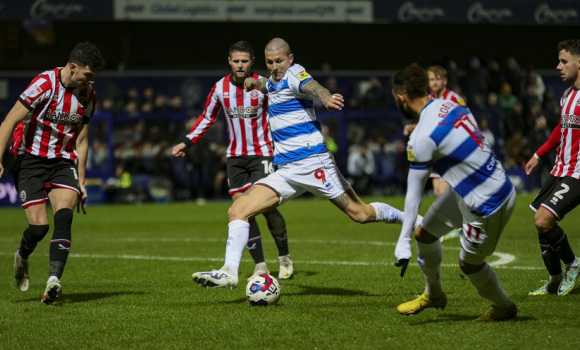
Whatever the case, I ventured back to Loftus Road on Monday night hoping for some sort of response. Not a result, necessarily, because although Rangers did win 1-0 in the away fixture against Sheffield United they’re one of very few teams to have got any joy from this opponent at all this season, and the Blades arrived in West London on a sequence of eight wins from nine matches, well clear in the automatic promotion spots and seemingly cantering back to the Premier League at the second time of asking. Their away record is better than every home record in this league apart from Burnley, the only team to have outscored them. Their defensive record is the league leader. They have a £20m central midfielder in their team who’s built like the Buxton Opera House. But… something. Pride and passion and all that guff that takes up 85% of the conversation time on the Keys and Gray show, and that football fans get very vexed about when it’s perceived to be missing. But also, some tactics, some resistance, some brains, some physicality. Some basics really. We don’t need Pep Guardiola to pop down to Heston to teach us how to run about. I wanted to see us compete. It’s only the Championship. Initial signs, not brilliant. Sheff Utd all a bit fast and good, QPR all a bit 'take my wallet just don’t punch my face'. Some of the early defending rattled around in the grey zone between ragged and shambolic. Having given a sloppy ball away Rangers were lucky Billy Sharp missed the resulting cross entirely. Later, played in by N’Diaye, Sharp struck a low shot that Dieng saved well with his legs. A goal here for the visitors could have set us off on the rail replacement bus service to Shattered Dreams Parkway once more. Coming from behind used to be a strong suit of Mark Warburton’s team, but every game Rangers did win in 2022 they did so from the front bar Reading at home this season and Luton away last. First goals are important. Lyndon Dykes doesn’t score many of them himself, but he tracked all the way back to the edge of his area on ten minutes to put a rabble-rousing tackle in on Doyle as he looked to get a shot away, and from there the crowd and team began to grow into the game a little bit. Sam Field put a good tackle in on Sande Berge, and then soon after committed a clever professional foul to halt an attack. Chris Willock, recalled to the left, started to team up with his little mate Illy to good effect. The tactical set up, like everything else, was a polar opposite to Thursday night. There was just something a bit about us, in stark contrast to any of the last four home games, and when Sheff Utd rather arrogantly and carelessly botched a short goal kick routine Chair returned the ball with interest, off a lazy attempted block from Egan who’d given it away in the first place, and into the back of the net past stranded League One Wes. New narrative, new dynamic, new page one with a turn to three — call the press hall, tell them it’s a stop. Tyler Roberts started playing well. His ball through the six-yard box on 23 minutes was terrific, and has to be gobbled up by somebody however well Ahmedhodzic defended it. Bouyed, the Leeds loanee sat Ciaran Clark down and stole his lunch money, winning a corner. When QPR, as they’re rather prone to do without Stefan Johansen taking them, got the delivery wrong United broke at pace and Osman Kakay, a surprise inclusion with Ethan Laird absent, committed a splendid tactical foul of exactly the kind we’ve been lacking in recent times. Kakay, until he tired, cramped up and became a liability in the closing moments, had a really impressive 85 minutes on his comeback here. Sheff Utd had perhaps expected a hall pass, instead they were getting an interrogation. QPR, at last, all you want and more. Things began to fly from end to end as the two fighters started swinging. Roberts took a swipe at a presentable chance from a QPR corner and fluffed it. Breaking through what seemed like a pretty obvious foul on Tim Iroegbunam, the impressive N’Diaye at one point looked like he was going to slalom through three defenders at once to score but was just about crowded out. Dunne needed to nip in ahead of Sharp as he lined up a shot. Dickie the same with Baldock and, when Josh Smith again played on through what looked like a Sheff Utd foul, Stevens whipped a 20 yarder just past the post. Not having that, the tireless Dykes set off after the visitors again forcing Foderingham to pick the ball up outside his box for an obvious free kick and yellow card. Rob Dickie’s fierce strike from the edge of the box was blocked well by Clark. Entertainment to get the blood pumping, after the four artery hardeners we've suffered through prior. For the visitors, trouble at mill. Foreman Heckingbottom decided on a shift change: James McAtee added pace, drive and floppy hair; Jack Robinson brought a long throw and nothing else of value whatsoever. Having brought a gun to a toothpick fight and somehow gone behind, now the Blades decided to “get ugly” as their manager said afterwards. Not for the first time on the night, Seny Dieng was roughed up. Not a difficult decision for the referee to make, but he was surrounded by visiting players regardless. Straight to the other end and they were treated to a nice free kick when Foderingham went flapping around like Christ in a crucifix shop. Hmmmm. I know we like our team to be better than this, but it does feel sometimes like we get talked out of decisions we should get. Both decisions probably correct - less so Sam Field seeing yellow, a bit of a joke relative to one that Baldock was later let off with through the back of Chair. QPR started the half well. Lyndon Dykes was all action, all night. I thought he was excellent, and we’ll set aside the frustration I have with him, and this team in general, that nights like this only make games like Luton sting all the more — because they can fucking do it, they are fucking capable, and here they fucking were showing that. An early chance dropped his way and deflected just wide — nicks off defenders were becoming a theme here, and sadly there was one more crucial one to come. Dykes brought Willock into proceedings but his shot was well wide. A second goal would have been heaven sent, and the longer QPR had to wait for it the more chance there was of something going wrong. Roberts, his best performance for some time, did all of the right, but held on too long, and on the resulting counter attack Sharp drew Dieng, chipped him, but missed the empty net by a foot or so. The sequel to that wasn’t any easier to sit through — another poor QPR corner allowing United’s best player, N’Diaye, to go streaking away almost the full length of the pitch where his Senegal international team mate Dieng loomed large and in perfect poise to make a great save one on one.
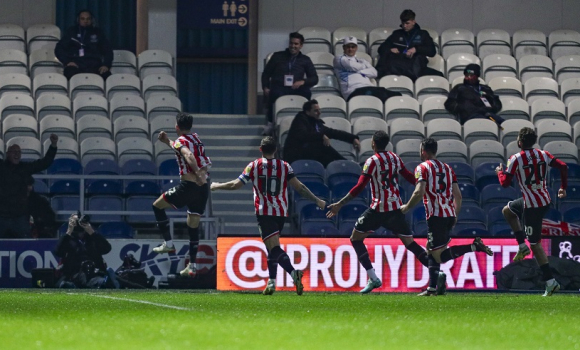
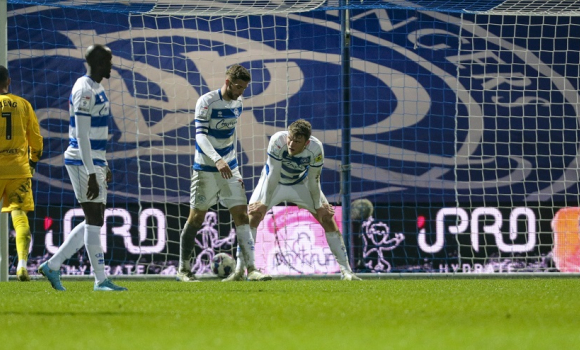
You start to think it’s your night. When these moments of light appear through perpetual darkness at QPR, it often comes just when all hope seems lost, just when you’ve given up on them entirely. Shades of Luke Freeman versus Leeds as Rangers kept going, kept plugging away, kept tackling and niggling, kept getting on the ball. Lyndon Dykes, rampaging around, an absolute pain for all who played against him. Sam Field, standing up to an immense midfield challenge. Jimmy Dunne, every header. And the clock starts to drain away and the witching hour approaches and the crowd finds its voice and the belief starts to creep back in a little bit. Come on you R’s. Just a little while longer. Or, better still, a second goal. They might have had one, when Dykes’ latest bit of battering ram approach play got Chair some good ball in the area, but with a queue of options for a pass he selfishly took on a shot and spurned the golden moment. Never mind, 14 to go now, keep going, keep trying, keep willing. Keep going. Keep going. Tick followed tock followed tick followed tock. Come on you R’s. Come on you R’s. Of course you look back on that chance for Chair to square the ball, in the horribly cold and depressingly sober light of Tuesday, and wonder what might have been. What if Dickie’s shot at the end of the first half had gone in? What if a second deflection off Egan had beaten Foderingham close to the end, rather than looping onto the top of the net? What if we hadn’t, for the umpteenth time on the night, not totally wasted that late corner we got as a result? Did we perhaps sink back too far, too soon? Could we have made other substitutions, particularly given that Osman Kakay, making a first league start since August, was obviously baggage by this point after a fine personal innings? Could Sinclair Armstrong’s speed have been useful to us on the break? Are you allowed to bring a second goalkeeper on? Coulda, woulda, shoulda… all the way through the five minutes of allotted stoppage time, and out the other side (because of an injury to Kakay) into a heartbreaking equaliser from John Egan, scored with a shot that was flying straight to Seny Dieng before it struck Dickie and changed course, in what proved to be the very final second of play. Ultimately it simply was not, as it turned out, our night after all. Fair, perhaps, on the balance of the play and the chances in the game, but sickening in the way it played out and desperately harsh on the QPR players and their manager.
Still, in every way apart from the result, I got what I came for. I whipped them last week because I absolutely do not intend to spend the next five months of my life trekking around the collapsing infrastructure of this country, spending money I don’t have getting to Huddersfield and Middlesbrough and Rotherham and Burnley to watch a team that pulls its legs out of tackles, that ducks away from headers that might hurt a bit, that phones in tepid resistance to the might of Luton Town. I wanted to see them run, and run they did. I wanted to see them tackle, and tackles there were. I wanted first contact, I wanted second ball, I wanted 50/50s. They gave me, us, all of that in spades. Neil Critchley, having got things badly wrong against the Hatters, had the set up spot on here, playing to the strengths of the team’s best players and its centre forward. The form team in the division against the hopeless rabble we have become lately, and we went toe to toe from minute one (well, minute four-ish), competed, made them uncomfortable, scored, led, and came within perhaps ten seconds of winning the game. What frustrates me most about this team is it’s not a Steve Slade-Karl Ready-Iain Dowie collection of crap footballers, and nor is it a Joey Barton-Jose Bosingwa-Shaun Wright-Phillips assembly of mercenary wasters. It can be a very good team, we’ve seen it in multiple games through the first half of the season. It’s unfathomable to me that they can dip quite so far below their line as they have done recently. Having re-established some minimum standards here — hell, having restored some fucking dignity — let us never speak of QPR 0 Luton 3 again, nor see its like repeated by these players at any point between now and May. Links >>> Photo Gallery >>> Ratings and Reports >>> Message Board Match Thread QPR: Dieng 7; Kakay 7, Dickie 6, Dunne 7, Paal 6; Field 7, Iroegbunam 6; Chair 7, Willock 6 (Amos 74, 6), Roberts 6 (Adomah 78, 6); Dykes 7 Subs not used: Richards, Shodipo, Masterson, Armstrong, Mahoney Goals: Chair 11 (assisted Willock) Bookings: Field 57 (foul), Dunne 86 (foul) Sheff Utd: Foderingham 5; Ahmedhodzic 6 (Bogle 83, -), Egan 6, Clark 5 (Robinson 46, 6); Baldock 6 (Jebbison 70, 6), Berge 6, Norwood 6, Doyle 6 (McAtee 60, 7), Stevens 6; Ndiaye 7, Sharp 6 Subs not used: Davies, Basham, Brooks Goals: Egan 90+6 (assisted Stevens) Bookings: Foderingham 39 (handball), Jebbison 90+2 (foul) QPR Star Man — Lyndon Dykes 7 A microcosm of the whole team: you couldn’t fault him, or any of them, for their effort and impact here; the frustration is it shows that he, and they, are capable of it, which makes performances like last week’s all the more galling. Referee — Josh Smith (Lincolnshire) 6 Some bits and pieces as there’s always going to be — Sam Field’s booking felt harsh given some of the other stuff that wasn’t carded, such as Baldock’s late and frustrated hack at Chair, and like Neil Critchley I think there’s an argument for a foul in the build up to the sickening equaliser — but overall I thought he refereed a competitive game reasonably well. Attendance 14,451 (1,500 Sheff Utd approx.) A lot more than I thought would be here after the Luton debacle, a lot quieter than I thought it should be given how the game panned out. If you enjoy LoftforWords, please consider supporting the site through a subscription to our Patreon or tip us via our PayPal account loftforwords@yahoo.co.uk. Pictures — Ian Randall Photography The Twitter @loftforwords Ian Randall Photography Please report offensive, libellous or inappropriate posts by using the links provided.
You need to login in order to post your comments |
   Blogs 31 bloggersUnited by Football, Divided by Race? Swansea City’s Asian Footballers and Racism in British Football by KeithHaynes Harrison who is studying towards a media qualification has written a very interesting piece on racism in football. It’s a very clear and well documented report. Follow him on X. @HYE15h. Football is often seen as a sport with a unique power to bring people together, connecting people from all over the world with different cultures, races and religions. 128 nations have featured in the topflight of English football, including 12 Asian nations. I have seen for myself how football connects people who otherwise have little in common through my support of Swansea City. These connections are epitomised by an exchange I had with South Korean tourists during a visit to London in August 2015. My three brothers and I were wearing our Swansea shirts, which South Korean tourists recognised because the South Korean captain, Ki Sung-yueng, was playing for our team. We connected over our shared admiration for Ki before having photos together. However, despite the unity football creates, racial incidents challenge the belief that football is a game for all. Kick It Out data shows there were 1,744 reports of discrimination, a record high last season, whilst racism reports against South Asians increased by 100%. This season we’ve already seen racial abuse allegedly directed at Swansea City’s Ji-Sung Eom during a game against Millwall. Former Swansea British Asian player Yan Dhanda was also subjected to racist messages online in 2021. Ki’s experience of racist chanting in Scotland in 2010 before joining Swansea shows that racism against Asians in British football is not a new phenomenon. In light of these incidents I will analyse the impacts of racial abuse against Asian players and football more widely, and ask if enough is being done to stop it. There are a multitude of different impacts from racial abuse within football, most notably the damage to player welfare. Yan Dhanda talked about the hurt he felt in the aftermath of his attack, stating how it affected both his family and how he was in training. Research by Osinnowo Kolawole reveals how the long-term emotional damage of racism is often unseen, affecting both personal lives and their performance. Racism can also lead players to question whether they want to continue playing football, as seen with Danny Rose. Osinnowo further states how racial trauma can lead to deep internal conflicts, with players altering their appearances to conform to white norms in football. For Lee Chun-Soo a former South Korean international footballer racist abuse left him with a desire to build a larger physique as a way of preventing further abuse. He believes the racial stereotypes about Asian players being small and weak results in a reluctance to recognise Asian players as equal competitors. This provides an example of an Asian player having to change who he is to be accepted into the sport, Lee and other victims of racism state how it can lead them to question their sense of belonging in the game. Premier League video content creator Kevin Yuan often faces racist abuse when filming at UK stadiums, despite living in the UK and following football since 2008, he states how he “feels like a foreigner, like I don’t fit in”. This challenge to a player’s sense of not belonging within the game has also had a severe impact on Asian participation with football in Britain, with just over 1% of professional players being of South Asian heritage. Whilst there are many factors which underpin this underrepresentation, racial abuse definitely plays a role. Research by Dr Stefan Lawrence reveals that overt racism within football academies from other players, makes British Asians feel like outsiders. Yan Dhanda talks about how during his time in football academies he was always told he wouldn’t make it due to his Asian background. For other Asian players lacking self-belief and support, abuse can prevent progression. Separate Asian teams and leagues have emerged in direct response to racism; these are seen as safe spaces for Asian players. Dr Lawrence has found that these separate teams and leagues do not have the same level of exposure as mainstream leagues, whereby they aren’t seen by scouts as repositories of talent. Furthermore, the lack of professional Asian players as role models not only limits young Asian players’ beliefs, but also limits coaches’ and scouts’ beliefs in what Asian players they are assessing could become. Seeing the few professional Asian players subjected to racial abuse risks discouraging the next generation from pursuing football. To combat racism in British football, a range of initiatives have been implemented by the leagues, clubs and organisations such as Kick It Out and Show Racism The Red Card. Whilst reports of racism are at a record high, this doesn’t necessarily mean that there is greater racism within football. More reports against racist abuse suggest people are more willing to report racist abuse when they see it, standing up to racism. Since 2022, Kick It Out has run fan education programmes for 500 fans referred by clubs or police, with a reoffending rate of just 1.25%. This shows the impact education can have in tackling racism. However, with 792 reports of racism in 25/26 season alone, many more of these programmes are needed to cover all the perpetrators of racist abuse. An increase of reporting by the media in highlighting racism within football can also be seen. For example, Sky Sports’ “Football’s Hidden Talent” series highlights the racism and inequality South Asians face in football. The racist incident against Ki in 2010 only making the local newspaper, compared to the nationwide and international coverage of the racial abuse against Eom, shows the heightened media coverage of racism in football. Whilst attitudes towards tackling racism have seemingly improved, there are still drawbacks. On-pitch protocols in dealing with racist abuse which were followed during the incident with Eom led to a 7-minute break in play, which afterwards was criticised by the Millwall manager for “killing the momentum”. Such comments were heavily criticised within the game for prioritising momentum over player welfare. An increasing number of Asian players in British football has coincided with Asians taking up a greater share of racism victims. Whilst more people are willing to report racism within the game, this has only revealed the great scale to which racism remains deep rooted in the game. In addressing this problem, harsher sanctions against perpetrators are needed. Cracking down on racism is crucial in addressing the underrepresentation of Asian players in professional football. The lived experiences of Asians in British football expose inequalities in who feels they belong within football. Football should be a game for all, with everyone equally included, whilst it connects so many, in its current state too many are left out. Swansea City has been at the forefront of taking action against racism within football. It was the first club to stage a social media boycott in April 2021 after abuse against Yan Dhanda, Ben Cabango and Jamal Lowe. A second boycott, which Swansea City participated in later that month involved other clubs and sports organisations across the world, representing a combined following of 1.7billion. Swansea City’s resolute actions against racism are reflective of one of the club’s strategic pillars ‘Cymdeithas’, which places the community, togetherness, and belonging at the heart of the club’s identity. It is an ethos that extends beyond the football pitch reflecting the importance of creating an environment in which everyone feels welcome and valued. The unwavering support shown towards Eom by the Jack Army in the aftermath of the alleged racist abuse he experienced, provides an illustration of these values in practice. Ultimately this piece has sought to highlight the very real and immediate impact that racial abuse can have on footballers, and why such behaviour cannot simply be dismissed, ignored, or accepted as part of the game. Eom Ji-sung’s experience is not an isolated incident, but forms part of a wider history of racial discrimination experienced by Asian players within football, including those who have represented Swansea City. While the club’s response and the unwavering support shown by supporters towards Eom provide encouraging examples of what football can represent at its best, there remains much work to be done in the fight against racism. My best wishes go to Eom, with the hope that the support of Swansea City and the Jack Army remains far louder than the abuse he has faced. Bibliography Premier League, 13 September 2025, https://www.premierleague.com/ Sky Sports, 31 July 2025, https://www.skysports.com/foot Andrew Raeburn, BBC Sport, 14 October 2026 https://www.bbc.co.uk/sport/fo BBC Sport, 11 February 2021, https://www.bbc.co.uk/sport/fo The Courier, 2 November 2010 https://www.thecourier.co.uk/s Swansea City AFC, 18 February 2021, Swansea City AFC, 8 April 2021, https://www.swanseacity.com/ne Swansea City AFC, 13 May 2021, https://www.swanseacity.com/ne Osinnowo, Kolawole, 2024, Exploring the Experiences of Racial Trauma among Footballers. https://uhra.herts.ac.uk/id/ep BBC Sport, 4 April 2019 https://www.bbc.co.uk/sport/fo Lee Chun-Soo, 23 October 2026, Nizaar Kinsella, BBC Sport, 20 November 2024, https://www.bbc.co.uk/sport/fo Kick It Out, 30 September 2026, https://www.kickitout.org/site COPA90, 24 January 2019, Gareth Vincent, BBC Sport, 12 November 2020, https://www.bbc.co.uk/sport/fo Sky Sports News, 25 May 2024, Sky sports, 31 July 2026, https://www.skysports.com/foot Kick It Out, 30 September 2026, https://www.kickitout.org/site Sky Sports News, 25 May 2024, Queens Park Rangers Polls[ Vote here ] |
 By continuing to use the site, you agree to our use of cookies and to abide by our Terms and Conditions.
We in turn value your personal details in accordance with our Privacy Policy.