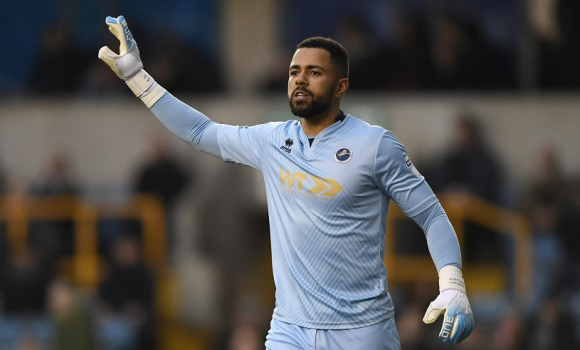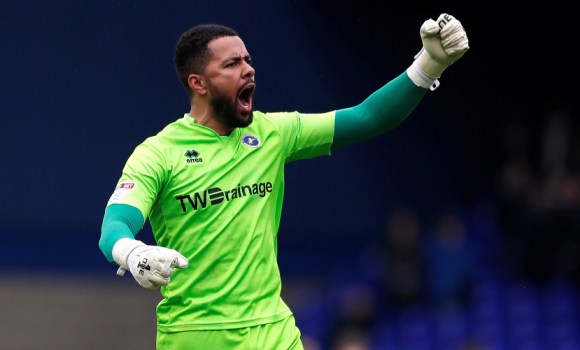
QPR bring in Archer as backup goalkeeper — Signing Wednesday, 7th Jul 2021 14:04 by Clive Whittingham Former Millwall goalkeeper Jordan Archer has moved to QPR on a free transfer following the departure of Joe Lumley to Middlesbrough and Liam Kelly to Motherwell. FactsJordan Archer is a 28-year-old goalkeeper born in Walthamstow who believes nightswimming deserves a quiet night and has a photograph on his dashboard taken years ago. He came through the ranks at Tottenham at a time when Les Ferdinand and Chris Ramsey were running the academy there, and as you would expect played much of his initial senior football out on loan. This started with spells in non-league with our local side Harrow Borough and later Bishop’s Stortford before 29 appearances for Wycombe in League Two in 2012/13 (W12 D5 L12 Con41 Clean8) and 16 for Northampton in the same league the season after (W5 D1 L10 Con29 Clean 3). He joined League One Millwall on loan for the second half of the 2014/15 campaign without playing but moved to The Den permanently that summer regardless and it’s here that he played most of his senior football. Archer made 49 appearances across the league and three cup competitions that season as the Lions finished fourth but they were beaten in the Wembley play-off final by Barnsley. Archer won the club’s Player of the Year award for his efforts and the season after was first choice again as Neil Harris’ men went one better, beating Scunthorpe in the semi-finals and Bradford in the final to win promotion back to the Championship. Archer played 45 times.
Wall made an impressive return to the second tier, finishing eighth thanks to a tremendous run of form after Christmas — had the season gone on another fortnight they probably would have made the six but missed out by three points. Archer was first choice throughout but began to attract criticism and drift out of the team during 2018/19 and was released on a free transfer at the end of the campaign. He remained a free agent for a number of months, returned to his more natural League One level for a brief six game stint at Oxford over Christmas 2019, and then spent most of 2020 as a third choice keeper at Fulham where he never made a senior appearance. He was allowed to leave on a free in October 2020 for a four game spell at Motherwell in the SPL (W0 D1 L3 Con7, Clean1) and was then given a crack at solving Middlesbrough’s ongoing goalkeeping woes with a free transfer there in January but failed to impress in six appearances (W2 D1 L2 Con8 Clean0) which included QPR’s 2-1 win at the Riverside and was then usurped once more by a similarly out of form Marcus Bettinelli. He has represented Scotland, qualifying through his parents, at U19, U20 and U21 level and has one senior cap in a friendly against Peru in 2018 — although I doubt he particularly enjoys watching the highlights of the 2-0 defeat back. He has now signed a two-year contract at QPR, joining on a free transfer as understudy to Seny Dieng. Reaction“There’s a great crop of young goalkeepers here and the club feel I can add experience to the group. I am here to get my head down and work hard. As a goalkeeper, you keep tabs on goalkeepers throughout the league and I saw how well Seny did last season. I am excited to come in, work with him and I am sure we can push each other.” - Jordan Archer “With Joe Lumley and Liam Kelly both leaving the club, we were short in that area so we needed to bring in a replacement who would be ready when called upon, but also could provide stiff competition for Seny — Jordan meets that criteria. He knows the league and he knows what’s required of him. Seny did exceptionally well last season and delivered a level of performance that we all enjoyed. He has to maintain that — and we have to maintain that pressure all over the park.” - Warbs Warburton OpinionA complicated goalkeeping situation has been a running theme of QPR’s most recent Championship stint. Twice we’ve worked ourselves into a situation where the gloves were held by a chronically out of form first choice, ahead of what we suspected (and were subsequently proved) to be superior understudies — Robert Green spaffing various disasters into his own net through the first half of 2015/16 then running off for a chunky-knit puff piece in the Mail on Sunday when he was, eventually, mercifully replaced by Alex Smithies; then Joe Lumley going through a painfully public crisis in form and confidence while Seny Dieng pottered around on loan and latterly the substitutes bench. The arrival of Liam Kelly at the start of 2019/20 was obviously a Mark Warburton pick having worked with the goalkeeper previously at Glasgow Rangers, but it placed the manager in the rather awkward spot of having three goalkeepers all of similar ability, experience and age in the squad at the same time. Warbs has already faced more stick or twist dilemmas over who should be keeping goal in two seasons at QPR than some managers face in ten. Seny Dieng has, rightly, emerged from that three-way battle as the clear winner which was always going to leave the other two looking elsewhere, particularly in Kelly’s case with a very successful loan at Motherwell last year alerting several Scottish clubs to his potential and availability. He’s right not to follow that career kickstart up with a prolonged bench sit, and QPR are right to let him pursue a number one role elsewhere — albeit rather inconvenient for us with Joe Lumley also choosing to turn down a deal as Seny’s understudy and try his hand at Middlesbrough after a near decade association with QPR. Kelly never really got going at Loftus Road, bar one memorable afternoon against Leeds when he saved a penalty in a 1-0 win, but he was an enthusiastic and vocal supporter of the team from the sidelines, and a huge and noisy presence in training. He comes across well, talks thoughtfully about his game, and I wish him all the best at Motherwell. Throw into all of that the signing of Dillon Barnes (also aged 25) who didn’t impress greatly at Colchester and seems to have been brought to Loftus Road not to play for the first team, or sit on its bench, or the U23s, or sit on their bench, or really to even play that often when he goes out on loan. His is perhaps the oddest case of all. I said at the time, and stand by it, that for a club that regularly bangs the financial restraints drum - and is in a constant battle with the #AnnounceRavel wing of its support base to explain maths, profit and sustainability rules and how to read a set of accounts - to add a fourth 25ish-year-old goalkeeper to a squad with three of those already felt a bit gratuitous. As we said in our End of Term Report, the sheer number of goalkeepers carried on staff by QPR at the end of 2020/21 was rather eye-opening. It’s no surprise to see several of those being released/departing this summer, but the eyebrows are back on the way up with the news of Jordan Archer’s arrival. With Lumley and Kelly gone/going, and promising youngster Joe Walsh now in from Gillingham and looking like a natural third choice to be loaned out for experience, the signing of Barnes might have made more sense were he to be the bench dweller for 2021/22, particularly as he’s been treated to a contract extension. But now it seems Archer is coming to do that job as Dieng’s understudy, with Walsh going out on loan to build his experience, and Barnes set for another season of many varied adventures. It’s a tough one to understand, I’ve asked Mark Warburton about it previously, I will endeavour to do so again given the opportunity, but I can’t get my head around the need for a fourth senior goalkeeper who never plays for us, nor anybody else.
Nor, really, the Archer signing. When the club were linked with Andy Lonergan I could see the sense in that. Not a particularly good goalkeeper, certainly not one that has ever played well against us at Loftus Road, but at 37 somebody who is not only very experienced and with an excellent reference from a recent spell at Liverpool but also somebody who knows where he is on his career timeline and will happily sit there not playing, working with Seny and Walsh, and can be trusted to fill in here and there if needed. The only thing Jordan Archer, at 28, really has in common is he’s always looked ropey when playing against us. Look, I’m wrong, all the time. Leave it to Mark Warburton, Gavin Ward, and the professionals who do know what they’re doing, what they’re looking for and what they want. Recognise also that aforementioned financial restraints mean that while it might be nice to have a golden glove nominee in waiting on your bench, we can’t afford that, particularly in a summer when we’re stretching ourselves to bring in Charlie Austin and Stefan Johansen which I never thought would be possible. Archer, presumably, is very affordable and happy to play the second fiddle role. I previously said Clint Hill and Shaun Derry were dodgy signings, Steven Caulker and Jordon Mutch were not, Conor Washington was ‘everything we should be doing as a football club’ and so on. I’ve been positive about every other deal done this summer and like very much the idea of Johansen and hopefully left back George Cox being added to that. I don’t like the running down of signings before they’ve even begun, because we’ve seen many times before a player that didn’t fit well at one club going and doing well at another and (usually in our case) vice versa. And I’m realistic about our place on the Championship’s financial ladder. But I can’t in all honesty sit here and pretend to be overly enamoured with the arrival of a keeper who I’ve often criticised before and who has struggled at this level consistently for several years, particularly when our first choice is likely to have African Cup of Nations commitments this season which mean this also can’t simply be dismissed as “well he’s only here to sit on the bench”. Archer, in all likelihood, will be playing for us through the busy January period at least, and we want to hope he does that a good deal better than he did for Millwall and Boro in this division previously. If you enjoy LoftforWords, please consider supporting the site through a subscription to our Patreon or tip us via PayPal The Twitter @loftforwords Pictures — Action Images Action Images Please report offensive, libellous or inappropriate posts by using the links provided.
You need to login in order to post your comments |
   Blogs 31 bloggersUnited by Football, Divided by Race? Swansea City’s Asian Footballers and Racism in British Football by KeithHaynes Harrison who is studying towards a media qualification has written a very interesting piece on racism in football. It’s a very clear and well documented report. Follow him on X. @HYE15h. Football is often seen as a sport with a unique power to bring people together, connecting people from all over the world with different cultures, races and religions. 128 nations have featured in the topflight of English football, including 12 Asian nations. I have seen for myself how football connects people who otherwise have little in common through my support of Swansea City. These connections are epitomised by an exchange I had with South Korean tourists during a visit to London in August 2015. My three brothers and I were wearing our Swansea shirts, which South Korean tourists recognised because the South Korean captain, Ki Sung-yueng, was playing for our team. We connected over our shared admiration for Ki before having photos together. However, despite the unity football creates, racial incidents challenge the belief that football is a game for all. Kick It Out data shows there were 1,744 reports of discrimination, a record high last season, whilst racism reports against South Asians increased by 100%. This season we’ve already seen racial abuse allegedly directed at Swansea City’s Ji-Sung Eom during a game against Millwall. Former Swansea British Asian player Yan Dhanda was also subjected to racist messages online in 2021. Ki’s experience of racist chanting in Scotland in 2010 before joining Swansea shows that racism against Asians in British football is not a new phenomenon. In light of these incidents I will analyse the impacts of racial abuse against Asian players and football more widely, and ask if enough is being done to stop it. There are a multitude of different impacts from racial abuse within football, most notably the damage to player welfare. Yan Dhanda talked about the hurt he felt in the aftermath of his attack, stating how it affected both his family and how he was in training. Research by Osinnowo Kolawole reveals how the long-term emotional damage of racism is often unseen, affecting both personal lives and their performance. Racism can also lead players to question whether they want to continue playing football, as seen with Danny Rose. Osinnowo further states how racial trauma can lead to deep internal conflicts, with players altering their appearances to conform to white norms in football. For Lee Chun-Soo a former South Korean international footballer racist abuse left him with a desire to build a larger physique as a way of preventing further abuse. He believes the racial stereotypes about Asian players being small and weak results in a reluctance to recognise Asian players as equal competitors. This provides an example of an Asian player having to change who he is to be accepted into the sport, Lee and other victims of racism state how it can lead them to question their sense of belonging in the game. Premier League video content creator Kevin Yuan often faces racist abuse when filming at UK stadiums, despite living in the UK and following football since 2008, he states how he “feels like a foreigner, like I don’t fit in”. This challenge to a player’s sense of not belonging within the game has also had a severe impact on Asian participation with football in Britain, with just over 1% of professional players being of South Asian heritage. Whilst there are many factors which underpin this underrepresentation, racial abuse definitely plays a role. Research by Dr Stefan Lawrence reveals that overt racism within football academies from other players, makes British Asians feel like outsiders. Yan Dhanda talks about how during his time in football academies he was always told he wouldn’t make it due to his Asian background. For other Asian players lacking self-belief and support, abuse can prevent progression. Separate Asian teams and leagues have emerged in direct response to racism; these are seen as safe spaces for Asian players. Dr Lawrence has found that these separate teams and leagues do not have the same level of exposure as mainstream leagues, whereby they aren’t seen by scouts as repositories of talent. Furthermore, the lack of professional Asian players as role models not only limits young Asian players’ beliefs, but also limits coaches’ and scouts’ beliefs in what Asian players they are assessing could become. Seeing the few professional Asian players subjected to racial abuse risks discouraging the next generation from pursuing football. To combat racism in British football, a range of initiatives have been implemented by the leagues, clubs and organisations such as Kick It Out and Show Racism The Red Card. Whilst reports of racism are at a record high, this doesn’t necessarily mean that there is greater racism within football. More reports against racist abuse suggest people are more willing to report racist abuse when they see it, standing up to racism. Since 2022, Kick It Out has run fan education programmes for 500 fans referred by clubs or police, with a reoffending rate of just 1.25%. This shows the impact education can have in tackling racism. However, with 792 reports of racism in 25/26 season alone, many more of these programmes are needed to cover all the perpetrators of racist abuse. An increase of reporting by the media in highlighting racism within football can also be seen. For example, Sky Sports’ “Football’s Hidden Talent” series highlights the racism and inequality South Asians face in football. The racist incident against Ki in 2010 only making the local newspaper, compared to the nationwide and international coverage of the racial abuse against Eom, shows the heightened media coverage of racism in football. Whilst attitudes towards tackling racism have seemingly improved, there are still drawbacks. On-pitch protocols in dealing with racist abuse which were followed during the incident with Eom led to a 7-minute break in play, which afterwards was criticised by the Millwall manager for “killing the momentum”. Such comments were heavily criticised within the game for prioritising momentum over player welfare. An increasing number of Asian players in British football has coincided with Asians taking up a greater share of racism victims. Whilst more people are willing to report racism within the game, this has only revealed the great scale to which racism remains deep rooted in the game. In addressing this problem, harsher sanctions against perpetrators are needed. Cracking down on racism is crucial in addressing the underrepresentation of Asian players in professional football. The lived experiences of Asians in British football expose inequalities in who feels they belong within football. Football should be a game for all, with everyone equally included, whilst it connects so many, in its current state too many are left out. Swansea City has been at the forefront of taking action against racism within football. It was the first club to stage a social media boycott in April 2021 after abuse against Yan Dhanda, Ben Cabango and Jamal Lowe. A second boycott, which Swansea City participated in later that month involved other clubs and sports organisations across the world, representing a combined following of 1.7billion. Swansea City’s resolute actions against racism are reflective of one of the club’s strategic pillars ‘Cymdeithas’, which places the community, togetherness, and belonging at the heart of the club’s identity. It is an ethos that extends beyond the football pitch reflecting the importance of creating an environment in which everyone feels welcome and valued. The unwavering support shown towards Eom by the Jack Army in the aftermath of the alleged racist abuse he experienced, provides an illustration of these values in practice. Ultimately this piece has sought to highlight the very real and immediate impact that racial abuse can have on footballers, and why such behaviour cannot simply be dismissed, ignored, or accepted as part of the game. Eom Ji-sung’s experience is not an isolated incident, but forms part of a wider history of racial discrimination experienced by Asian players within football, including those who have represented Swansea City. While the club’s response and the unwavering support shown by supporters towards Eom provide encouraging examples of what football can represent at its best, there remains much work to be done in the fight against racism. My best wishes go to Eom, with the hope that the support of Swansea City and the Jack Army remains far louder than the abuse he has faced. Bibliography Premier League, 13 September 2025, https://www.premierleague.com/ Sky Sports, 31 July 2025, https://www.skysports.com/foot Andrew Raeburn, BBC Sport, 14 October 2026 https://www.bbc.co.uk/sport/fo BBC Sport, 11 February 2021, https://www.bbc.co.uk/sport/fo The Courier, 2 November 2010 https://www.thecourier.co.uk/s Swansea City AFC, 18 February 2021, Swansea City AFC, 8 April 2021, https://www.swanseacity.com/ne Swansea City AFC, 13 May 2021, https://www.swanseacity.com/ne Osinnowo, Kolawole, 2024, Exploring the Experiences of Racial Trauma among Footballers. https://uhra.herts.ac.uk/id/ep BBC Sport, 4 April 2019 https://www.bbc.co.uk/sport/fo Lee Chun-Soo, 23 October 2026, Nizaar Kinsella, BBC Sport, 20 November 2024, https://www.bbc.co.uk/sport/fo Kick It Out, 30 September 2026, https://www.kickitout.org/site COPA90, 24 January 2019, Gareth Vincent, BBC Sport, 12 November 2020, https://www.bbc.co.uk/sport/fo Sky Sports News, 25 May 2024, Sky sports, 31 July 2026, https://www.skysports.com/foot Kick It Out, 30 September 2026, https://www.kickitout.org/site Sky Sports News, 25 May 2024, Queens Park Rangers Polls[ Vote here ] |
 By continuing to use the site, you agree to our use of cookies and to abide by our Terms and Conditions.
We in turn value your personal details in accordance with our Privacy Policy.