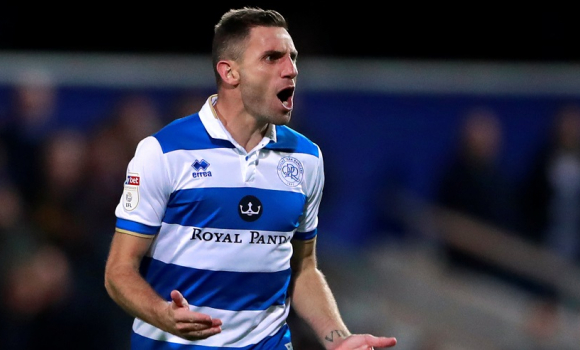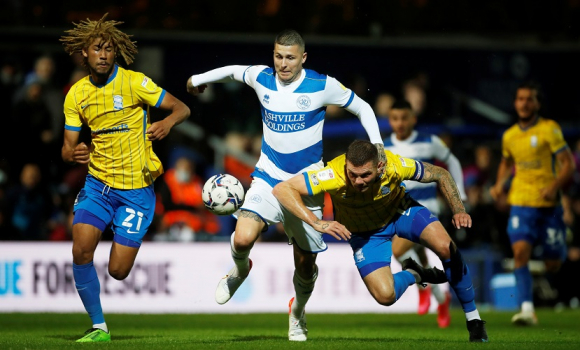
Andy Belk — Patreon Friday, 8th Oct 2021 14:39 by Clive Whittingham, Patreon LFW takes a peek behind the curtain at the notoriously secretive business of player trading as we sit down with the club's head of recruitment Andy Belk to discuss how the current squad was brought together, modern scouting, the influence of data on decision making and the impact of Brexit. LFW has been conducting written interviews with figures from QPR’s past and present for 17 years and publishing them free-to-view. Now, to help support both this website and the iconic AKUTRs fanzine, we’re also making the audio from these interviews available to all three tiers of our Patreon subscribers as podcasts as a thank you for your support. Listen to the full interview via our Patreon by clicking here or read for free below… Can you explain your role at the club and what it entails… The job title is head of recruitment, leading the recruitment department and making recommendations on permanent and loan signings. We look for players who fit financially, as a character, and will help the club short term, medium term and long term. I’d like to think you’ve seen over the last three windows since I’ve been in this role that we’re heading in the right direction. How does somebody go about getting into a role like this? There’s no one set way. I’ve been at the club 13 years now. I came up through the analyst route. I started here as an analyst, did that for eight years, moved over onto the recruitment side to provide an analytical side to the recruitment process and then moved up to head of recruitment from there. I think a lot of clubs are now looking for scouts at all levels. The scouting process has got bigger, even in non-league and below that clubs are seeing the value in it. There’s no right or wrong way to come into it. If it’s something you want to do then get in touch with clubs because they’re always looking for eyes on the ground. So your degree and education background was in statistics, analytics? My degree was in sports and exercise science, which everybody my age seemed to do. I came out of university not really knowing what I wanted to do but I did a module in that degree of performance analysis and thought it could be something for me. At the time you needed a masters really for a lot of the analyst job adverts that were coming around, so I went and did that. I think that’s gone away slightly now. People are often looking for experience over and above anything else. But that was my route and I went to work for a company called ProZone which has since been taken over and that got me a route into professional football. You just set up a Twitter account now don’t you? @BladesAnalytics… It does seem to be a way in now. We have recently, in the last six months, employed two recruitment analysts and one of them does have that blogging background. Clubs are always looking out on social media. I use it myself, it’s good in terms of seeing other stuff that you don’t always see within the sport. How big is your team here then? We have nine in the department and although it’s generally first team it’s also B Team and U23s. We’re not labelled as first team scouts, there is an academy department separately. Nine of us — myself, six scouts on the ground, and two recruitment analysts. And how does that mesh together with the manager, the director of football… how does that structure work? I probably speak to Les more than I speak to my wife. Harlington is a small training ground, although there are walls in the way my desk is probably five metres away from the manager’s and his is five metres away from Les. We have a pretty good, close working relationship and you’re seeing that with the players that are coming in. I like to think it’s working pretty well at the moment. Through the ranksAs you say you’ve been here a long time, is there a first signing you can remember being specifically involved with? The first one, before this role, probably would have been bringing Paul Smyth over. I’d worked with Northern Ireland’s U21s on their analysis and I’d seen Paul come through the youth set ups there. He was probably the first one I had the most to do with. And how has the job changed over the 13 years? When I first started I was known as the ProZone guy, the IT guy, whatever the role was called. It was about analysing the opposition for the pre-match meeting, post-match meeting and set play meetings. It evolved quickly with the new technology. When I first started some clubs were still using VHS and some were using DVDs. It’s obviously gone a lot further now. The principals of it stay the same, but the modern technology has made it a lot more efficient and in depth. Clubs have multiple analysts. We have two and an intern for our first team now, when I first started I was by myself. I remember when we signed Tjaronn Chery he was described as ‘statistical porn’ and it was the first time QPR had seemed to go away from ‘manager gets what manager wants’ and ‘who’s your agent?’ I’d only just started on the recruitment side at that point so I’m not sure how that one came about specifically. It certainly wouldn’t surprise me when you look at Chery’s metrics that it came about that way. I also wanted to mention one of the past summers, under Jimmy Floyd Hasselbaink, when we made a number of interesting signings from around Europe, not all of whom worked, and I wondered what learnings you guys had taken out of that. Yeni Ngbakoto for instance had a similar profile, background and skillset to a couple of players who signed at Brentford at a similar time and they went onto become £20m+ players whereas Yeni didn’t work out quite so well. I think Yeni had done everything right when he was playing in France, and that move should have worked out better than it did. I wouldn’t say it didn’t work fully, but it could have gone better than it did. A lot of that was you never know how people are going to settle. They’re moving countries, they’re still relatively young lads, language barrier and all that sort of stuff. There’s no formula for how people will settle in. There was a family situation in that specific case - I think it was well documented at the time that he’d had a personal family problem at the time of the move here which was unforeseen. In terms of the more general lessons we learned from that summer, and not at all using Yeni as an example, but I would like to think we do a lot more work now on things like character. We delve deeper into that side of things — we did that before, but we do it to the Nth degree now. You learn something from every transfer, be it foreign or domestic, league or non-league, there’s always a lesson to be learned. A lot of it is about using your contacts in the game. Myself, the manager, Les all know numerous people within the game. We’ll always know somebody who has worked with them, played with them, treated them for an injury. It’s never about speaking to one person, he says he’s a great bloke so he must be a great bloke. You have to take a lot of it with a pinch of salt, because not everybody is going to get on and just because they didn’t get on with them it doesn’t mean the next person won’t. We speak to as many people as we possibly can, not just about them as a character but about what their family life is like, what their background is like, what they are like in training, what they like to do away from the pitch. If we can get everything in place for them, make them feel at home and help them settle quicker, you’ll see better results on the pitch. Les has said it numerous times, a happy person off the pitch is generally a happy person on the pitch.
How has Brexit changed the game for you guys? The way I read the points system there doesn’t seem to be a lot of point a Championship team going and scouting some of the leagues that had born a lot of fruit for this level previously — Poland, Bundesliga 2… That’s spot on. You need 15 GBE points to come and play in England now. There is an exemption further down but generally it’s 15. You get those points depending on which league you play in, certain leagues are ranked higher than others — Bundesliga 2 isn’t ranked as highly as some others. But then you have other leagues like Belgium, Holland and some of the South American leagues where it is now easier to acquire the points than the traditional English Championship markets which were probably Bundesliga 2, French Ligue 2… That doesn’t necessarily mean there’s going to be a big influx of South American players in the Championship, because from a logistical point of view, the background stuff we spoke about a moment ago, and getting to see them live it’s not as easy to just nip over to Brazil to watch a player. It’s made it harder and easier. Easier because the pool of players we can look at is smaller. We use a data company that automatically works out the GBE points. There’s no point, even if a player has been flagged up through data and video, if they don’t have the requisite GBE points going and doing any more work on them. We’ll keep an eye on them, because around the international breaks if they happen to get a cap somewhere their points leap up. They might not be available in this window, but they could be in 12 months’ time. But it has made it harder because the pool being smaller means if we’re in for a player half the Championship will know about him. I don’t think there’s a case any more where you could unearth a totally hidden gem. Clubs are very smart now in terms of recruitment. That’s going to drive prices up? In theory yes. In my opinion I think it will drive up the English market again. It’s already over-inflated. The days of going to Poland like you mentioned, one of the lesser scouted countries, and picking up a cheaper talent has probably been eliminated to a certain degree. You mention physically going and watching a player in the Brazilian second division, how much of modern scouting is still that going and sitting in the stand and watching players? It’s still a big part of it. Since I’ve come into this role I’ve pushed us more in an analytical direction but I don’t want people to misinterpret that. We would not see a player’s data and go and sign that player. It’s still a lot of video work, a lot of live work, a lot of character work, and then it needs to work financially. You can’t underestimate the sitting in the stand and watching the player. We will always do that for every player we sign. Every player we’ve signed since I’ve been involved that’s been the case. You see more in live stadiums, you see how they react to certain situations, you get a bit of their character and their attitude, their behaviour towards other players, the referee and the coach. It’s part of it, with the video, and the data — signings are an amalgamation. I would run a mile from somebody who says they sign players purely from data, purely off video, purely off live scouting, or purely off their agent. It has to be an amalgamation of everything. How much time do scouts spend these days just heading off to random games in case there’s somebody good there? Less and less. I would never stop a scout going to a game but I would prefer them to go to a game with a purpose. If we’ve got our eye on a couple of players it would be best off them going to that game than a speculative one. I think if you go to a speculative game you’re hoping that first of all it’s a good game, that there’s a player in the position you’re looking for who does well, you’re hoping he fits the model financially… Although on the calendar there’s a fair distance to January, fixture wise there aren’t many games. Teams play twice a week, we’re a small recruitment department which is good and the way I like it, but you quickly run out of games. If you do the speculative one too much, by the time it comes to focus on a specific player you’d only have time to see them once or twice. We do do it, but it’s not our focus. There are stories like Angel Rangel’s, but I guess those stories get told because they’re rare. Yes. That story is few and far between. In that case they had a flight delayed and dropped in on a game, something along those lines. I wish that stuff happened more, but it doesn’t.
Everybody knows the club went through a period of dealing with certain agents. Is your job to take who the agent is out of the equation as much as possible? Yeh. Since I’ve been on this side this club hasn’t had a ‘favoured agent’ and I don’t see why anybody would. If we believe a player is good enough we’ll speak to the agent whoever that may be. If you’re limiting yourself to one agent, or your favourite agent, the pool of players becomes incredibly small and it’s not the best way for a football club to operate. How far ahead are you planning? In my head I always try and work two windows ahead if I can. You’ve got to always be mindful of players’ contracts, both our players’ contracts and the players you’re looking at. Are they coming to the end of a deal? Will they sign another one? That’s especially the case with foreign players who can start talking to clubs abroad earlier in their contract situation. I think you saw that last window and this window and with the four players who came in — Charlie, Jordy, Sam and Stefan. The planning and thought process for that started way back in November, or probably even earlier than that. The thought process was let’s target players that can come in and help instantly, the league position wasn’t great at the time, but also we have an outside shot of getting for the summer window. What we didn’t want was to come into this latest window and have another massive turnaround of players. It doesn’t help because there’s always a settling in period. So we targeted those four players, two of them we had an option on which we got done, and then obviously with Charlie and Stefan we always thought we had an outside shot of keeping and I’m delighted that we’ve managed to keep all four. You’ve seen the impact those four have made, not just them but they’ve certainly helped. This window was planned, most of it, this time last year. Are there circumstances where you’ve replaced a player while he’s still here? I’m thinking, maybe, specifically Chris Willock being signed while Bright Osayi-Samuel was still here but seemingly not going to renew his contract… I’m pleased you mentioned that one to be fair. We all wanted to keep Bright, but my job is always thinking ‘what if?’. Someone like Chris Willock becoming available, done the window before Bright left, provided continuity there. If Bright did eventually leave, we had a ready made replacement there. Chris is a slightly different player, but nevertheless a readymade replacement in that position. That one has worked perfectly, Chris has done exceptionally well.
Do you have a League One plan if this all goes to shit? Ha ha… well… We’re always looking at League One, it’s a big market for us at the moment. You’re always thinking, not just in terms of getting relegated, but Premier League as well. What if? What if we get promoted? You’ve got to operate like that. Knowing the best players in League One, whether we take them like Rob Dickie now for us and they take us onto the Premier League. Sorry, hospital pass, it’s just my nature to ask it that way around. When planning ahead, we have a manager here at the moment that fits well and has been here a relatively long period of time, but we did go through a period where we not only changed managers frequently but they were very different managers. How does that challenge the thinking? There’s always going to be slight tweaks with new managers. There will always be differences in what they want players to do. At the moment it’s a really good blend, the way the manager wants to play football and the players we’ve got it’s a good suit. Watching us play we’re an enjoyable team to watch. The blend is right at the moment. There will always be those tweaks with changes, but it comes down to the club philosophy and how the club wants to play. I think you can see that now the club’s philosophy and the manager’s philosophy are very closely linked. Good now, but like I say we did hop between quite different managers for a time, was that difficult to plan for and build momentum? It is always difficult. You end up with players in a squad that have been there for three or four managers. You end up with a collection of players, some who fit one manager, some who fit another. That never quite works. Mark’s been here three seasons now and that always helps to settle a team down. Most of the squad now certainly know how Mark wants to play. I like Perez, he’s got a classy swingAre there signings in the squad now who are Les signings, Mark signings, Andy signings? I presume Mark gets final say but are there signings you can point at that you can hang your hat on and say that one was mine… I don’t see them as my signing, Les’ signing, Mark’s signing. It’s a QPR signing. We are always in meetings, always talking, the model is we all have to agree. Nobody is coming into the club who Mark doesn’t want because there’s no point the club signing a player if the manager doesn’t want him, that doesn’t make good business sense. We all see football a similar way so while we don’t always agree on players most of the time we tend to do. Liverpool call it a transfer committee, I wouldn’t call it anything as formal as that but we have regular meetings with Lee Hoos and we all bring players to the table to discuss. I might suggest a player and Mark says ‘not for me’, vice versa, and the same with Les. Three heads are better than one. What does that meeting look like? Is it the Moneyball thing with whiteboards everywhere? We do have an office in the training ground that looks like that. Can we do the next interview in there? It’s rather tucked away under lock and key, a room full of whiteboards so I don’t have to try and keep it all in my head. The meetings are not what you’d think in terms of that. Sometimes there’s a screen up so the owners can join. It’s just an open discussion, very respectful about each other’s views, we’ve all got the best interests of the club at heart and want to do what makes sense short and long term. Are there particular attributes we’re looking for in players at the moment, be it age, pace… It depends in terms of position. With Andre Gray for instance that was a very specific thing, we felt we needed a different type of striker to what we’ve already got. Somebody to complement Lyndon and Charlie, and allow Charlie Kelman to go out on loan. The way we play, any player we’re looking at has to be comfortable with the football. We try to dominate the ball. In the last three windows I wouldn’t say we’ve gone overly young, there is a blend of experience in there, but every club is looking for resale value or somebody who can help kick us onto the Premier League. Somebody like Rob Dickie I think fits both of those models. Let me try and phrase this right so it’s not as stupid a question as it might sound. Are we attracted to players that don’t have a great injury record, by way of getting value from the market? We don’t go looking for injured players. It’s not something we target. We’re a club that probably doesn’t have the financial competitive edge over several other teams in the division. We probably can’t go out and buy ready-made players. They cost £xm. We need to be a little bit creative in terms of what we do. Bringing players in that our excellent coaching staff that we have all the way through the club can improve and get them to do what we want, some of them have had injury issues which has probably allowed us to take them. Not just injuries but also just not playing regularly at their previous club. The four we signed on loan and then permanently was a mixture of both. A couple of them weren’t playing because they’d had injuries. It’s not something we overly target but if it can work in our favour and everything falls in line - they can do what we want them to do, it works financially, we can make them better and develop them — then it’s not something we’ll shy away from. The medical staff have done excellent work with the players we’ve brought here. It felt to me like we pushed the boat out this summer, more so than in previous years, and we also haven’t made a significant sale this summer for the first time in a while. Did our end to last season, or the state of the rest of the division encourage that, or have we been building up to that for a period of time? It’s been part of several discussions we’ve had going back a couple of years. What happened before with the FFP we always knew that as we were coming out of that period other clubs would be going into it, and it’s now well documented that this is happening. The timing just felt right, the owners and shareholders were willing to do it. I think we’ve improved every year under the manager and finishing ninth last year we weren’t too far away. There was value for money in the market, Covid-19 helped that a little bit. Fingers crossed, we’ve got off to a good start, as the manager said there’s no point still sitting here saying we just want to be competitive, we always want to improve on the previous league finish and if we do that we’ll be close. We seem less reliant on the loan market than we were a couple of years ago when at one point all our strikers were routinely on loan. Is that just because we can, or because that market has changed, or we didn’t like what we got? I think we did very well in the loan market, with Nahki and Jordan. But those type of players are not available every window. If they were then chances are it would be late on, like Andre Gray was. It’s always nice to own your own strikers but we weren’t in a position to do that before. I felt we could get better players, strikers certainly, on loan at that point. But it’s always better to own them and you saw last summer with Lyndon Dykes, Macauley Bonne and Charlie Kelman it was a big drive throughout the club to be able to own strikers. They get embedded into how you play and having them for longer than six or 12 months suits the club a lot better.
Any particular reason that move for Macauley hasn’t quite worked out as you would have hoped? I wouldn’t say it hasn’t worked out. With the strikers we’ve brought in and Charlie Austin becoming available it was evident he was going to get limited game time. He wants to play as every good player does. He scored 12 league goals the season Charlton went down, and he’s gone to Ipswich and scored there. I think he’ll go there, score loads, and come back a better player. There’s no point him sitting on the bench here for a whole season. We went a lot earlier in the window than we have previously, was there a feeling that the value is actually now at the start of the transfer window than the end? In terms of money I don’t think anybody really knew where the market was going to be at. Every club wants to do its business early. Four of them were lined up from the previous window. Andre Dozzell we were very active on him going into the previous January window but he signed a new deal at Ipswich and we had to back off a little bit. We’d done a lot of work on him many months prior, so half of the business we did this window was prepared well in advance. It was as straightforward as a transfer window could be really, credit to Les, Lee and the owners for managing to get that business done quickly. Dozzell was on my list of specific players I wanted to ask you about — how did it come about, why do we like him? Dozzell we’ve probably been watching for the best part of two years. Regularly as well. He’s somebody that ticks a lot of boxes for where this club is going: can play various positions in the middle of the park; he’s a good ball player, we’ve seen his passing when he has come in and played; it was good value for money, very good value for money at that time with certain situations developing; the age; the potential resale value. He ticks a lot of boxes and he will only get better. I was very pleased we got that one over the line, it’s somebody we’ve watched a lot. Jordy De Wijs. Hull had conceded a lot of goals, he had injury problems, and yet here he is playing like this for us. Where was the attraction there? With Jordy he was flagged up through the data models. From the outside I get that it looked a bit strange, he wasn’t even playing for a League One side, but he did everything we’re looking for and more in that position. People don’t fit, or fall out of favour at clubs, for various reasons. They thought they had somebody better and he wasn’t playing. That presented a great opportunity for us to take him on loan as a try-before-you-buy. As soon as he came in you see exactly what he does. He’s very dominant but he can play, and that suits us perfectly. Rob Dickie, I’m amazed there wasn’t more interest there, was that just us getting in early? Talk us through that one. Rob was another who we’d watched for a long time. He scored really well on data. For me he was the best centre back in League One. I think he’s now one of the best centre backs in the Championship as well. We did get in early on that one, there were rumours of a few clubs sniffing around but I think it’s testament to our club that Rob could see how we play, see where it’s going. This club is a much easier sell to players now. Even taking out the start of the season we’ve had, people see now from the outside where we’re going as a club and want to be part of it. To go off on a slight tangent, it’s now much easier for us to get players out on loan. Clubs are phoning us asking to take players, whereas going back a few years that wasn’t the case. They’re actively pestering, in a good way, us for our players. They know we have fringe players that can play that type of football.
How much of this is the Eze effect? £20m coming into the club… players see the development potential… Definitely. I don’t think it’s harmed us. People have not only seen us compete at the right end of the table and hopefully you can come here and play in the Premier League with QPR. If not and somebody comes in for you that’s a possibility too. That’s credit to Chris and the academy really. There’s been a group come through there, Ilias, Eze, Oz Kakay, have all competed at first team level. Lyndon, playing for Livingston in a league that doesn’t have the greatest reputation… He ticked a lot of boxes in what we needed up front: a physical presence; undervalued at Livingston, when people look at that league they tend to focus on the bigger two and undervalue players elsewhere. It took him a little bit of time to adjust but you’ve seen at the back end of last season, the start of this season, and for Scotland, he’s still learning but he’s doing well. Is the recruitment and retention of goalkeepers different? Where does that fit, who’s involved? Gavin Ward generally identifies the goalkeepers. Obviously the department will help him out if needs be but it’s almost a separate entity. Gavin is looking for different things to probably what I would look for, a much more technical point of view around positioning, shot stopping, playing out from the back. I think Gavin has done very well with the keepers. The way we play the goalkeeper needs to be comfortable with the ball at his feet and the ones we have around the first team now are certainly that. Never mind the quality, feel the xGSo we have started the season well, but we’re low down on the xG, or so I’m told by people that know these things. Do you care? Yes, I do to be honest. I look at a lot of data, not just on players but on teams. Over a longer period of time xG is useful. I tend not to use it on a game by game basis because the sample size is too small. Over a season I think it’s never usually too far away. I don’t hang my hat on it but it’s very close. We use several data companies, one for game data and player data, and another for AI stuff — predicting future performance of players and teams, where we’re expected to finish in the year. That’s not solely done off xG, it’s done off the pattern of play and interaction of players. But it’s a good indicator. I do use xG. Over a season it’s never usually too far away. We’re high in the league but low on xG at the end of August, is that too small a sample size as well? I think so. I look at the trend lines and the six game rolling average, you can see if you’re going in the right direction. I get there are limitations to xG which people will discuss but it’s very useful not only for teams but when we’re thinking about strikers you’ll often hear a commentator say “he should have scored” when in fact the data tells you it’s not a good a chance as you think it would be. Over a season you can see what they’re expected to score and what they have scored. You might have a striker who is perceived to not be scoring enough, but the data tells you they’re scoring exactly as they should which then brings in another conversation about whether we’re getting good balls into him or is it their movement and they’re not putting themselves in the right position? The data gives you more questions than answers but it can direct you. So when I come out of Hull away where we won 3-0 and admittedly the goalkeeper should save the first goal but after that we score through a striker in the centre of the goal 15 yards out, another which is an open goal from a yard, we miss a one on one with the keeper and a header from two yards out, and come out with one of the lowest xGs in the division for that day, 1.56 I think, and social media, I hold my hands up me too, look at that and say ‘bollocks’. Are we just not understanding? If you score a goal you will always be out performing xG because there is no xG at 1.0. I do get the limitations of it. For me I think the title of the metric is probably worded wrong. It’s more about the quality of the chance. It just gets you away from “we had 15 shots and they had two” — their two shots might have been in the six yard box while ours are from 30 yards away. I use it for the quality of the chance. For me I feel it gives me a better context of the game and certainly from the strikers’ point of view you see how clinical they are — the better strikers will always outperform their xG, and that can help you spot under-valued players. It is something we keep an eye on and we do look at it but it needs to be over a sustained period of time. Are there other clubs doing clever things that you admire from afar? I’m sure there are. It’s not necessarily something you’ll know too much about because the recruitment departments at clubs are usually a very well guarded thing. There are other clubs that it’s well documented how they operate, or how they’re perceived to be operating, but we’re doing what we think is right for QPR. Is there a signing you’re most proud of? Probably not an individual. I’m proud of the work the department has done. I like to think we’ve done pretty well. Who’s your one that got away? Who keeps you up at night? Oh there’s always a few who got away. I won’t name him but there is one, in last summer’s window, we thought we were very close to, we’d spent a lot of time on it, and it didn’t get done. There was a big, big club came in and took him at the last minute. Has he done well? He has. They’ve just loaned him out but he’s young and he’s done well. If you guess him I’ll be amazed. But, yeh, that did keep me awake at night building up to it and afterwards. One that got away. That’s always going to happen. There haven’t been many though, the club has been good in getting the deals done. The position we’re in at the moment has allowed the club to be quite aggressive in the market and if the deal escalates or there are any red flags we’re more than confident in walking away. If you enjoy LoftforWords, please consider supporting the site through a subscription to our Patreon or tip us via PayPal. Patreon also gives you the ability to listen to these interviews as audio podcasts. The Twitter/Instagram @loftforwords Pictures — Action Images Action Images Please report offensive, libellous or inappropriate posts by using the links provided.
You need to login in order to post your comments |
   Blogs 31 bloggersUnited by Football, Divided by Race? Swansea City’s Asian Footballers and Racism in British Football by KeithHaynes Harrison who is studying towards a media qualification has written a very interesting piece on racism in football. It’s a very clear and well documented report. Follow him on X. @HYE15h. Football is often seen as a sport with a unique power to bring people together, connecting people from all over the world with different cultures, races and religions. 128 nations have featured in the topflight of English football, including 12 Asian nations. I have seen for myself how football connects people who otherwise have little in common through my support of Swansea City. These connections are epitomised by an exchange I had with South Korean tourists during a visit to London in August 2015. My three brothers and I were wearing our Swansea shirts, which South Korean tourists recognised because the South Korean captain, Ki Sung-yueng, was playing for our team. We connected over our shared admiration for Ki before having photos together. However, despite the unity football creates, racial incidents challenge the belief that football is a game for all. Kick It Out data shows there were 1,744 reports of discrimination, a record high last season, whilst racism reports against South Asians increased by 100%. This season we’ve already seen racial abuse allegedly directed at Swansea City’s Ji-Sung Eom during a game against Millwall. Former Swansea British Asian player Yan Dhanda was also subjected to racist messages online in 2021. Ki’s experience of racist chanting in Scotland in 2010 before joining Swansea shows that racism against Asians in British football is not a new phenomenon. In light of these incidents I will analyse the impacts of racial abuse against Asian players and football more widely, and ask if enough is being done to stop it. There are a multitude of different impacts from racial abuse within football, most notably the damage to player welfare. Yan Dhanda talked about the hurt he felt in the aftermath of his attack, stating how it affected both his family and how he was in training. Research by Osinnowo Kolawole reveals how the long-term emotional damage of racism is often unseen, affecting both personal lives and their performance. Racism can also lead players to question whether they want to continue playing football, as seen with Danny Rose. Osinnowo further states how racial trauma can lead to deep internal conflicts, with players altering their appearances to conform to white norms in football. For Lee Chun-Soo a former South Korean international footballer racist abuse left him with a desire to build a larger physique as a way of preventing further abuse. He believes the racial stereotypes about Asian players being small and weak results in a reluctance to recognise Asian players as equal competitors. This provides an example of an Asian player having to change who he is to be accepted into the sport, Lee and other victims of racism state how it can lead them to question their sense of belonging in the game. Premier League video content creator Kevin Yuan often faces racist abuse when filming at UK stadiums, despite living in the UK and following football since 2008, he states how he “feels like a foreigner, like I don’t fit in”. This challenge to a player’s sense of not belonging within the game has also had a severe impact on Asian participation with football in Britain, with just over 1% of professional players being of South Asian heritage. Whilst there are many factors which underpin this underrepresentation, racial abuse definitely plays a role. Research by Dr Stefan Lawrence reveals that overt racism within football academies from other players, makes British Asians feel like outsiders. Yan Dhanda talks about how during his time in football academies he was always told he wouldn’t make it due to his Asian background. For other Asian players lacking self-belief and support, abuse can prevent progression. Separate Asian teams and leagues have emerged in direct response to racism; these are seen as safe spaces for Asian players. Dr Lawrence has found that these separate teams and leagues do not have the same level of exposure as mainstream leagues, whereby they aren’t seen by scouts as repositories of talent. Furthermore, the lack of professional Asian players as role models not only limits young Asian players’ beliefs, but also limits coaches’ and scouts’ beliefs in what Asian players they are assessing could become. Seeing the few professional Asian players subjected to racial abuse risks discouraging the next generation from pursuing football. To combat racism in British football, a range of initiatives have been implemented by the leagues, clubs and organisations such as Kick It Out and Show Racism The Red Card. Whilst reports of racism are at a record high, this doesn’t necessarily mean that there is greater racism within football. More reports against racist abuse suggest people are more willing to report racist abuse when they see it, standing up to racism. Since 2022, Kick It Out has run fan education programmes for 500 fans referred by clubs or police, with a reoffending rate of just 1.25%. This shows the impact education can have in tackling racism. However, with 792 reports of racism in 25/26 season alone, many more of these programmes are needed to cover all the perpetrators of racist abuse. An increase of reporting by the media in highlighting racism within football can also be seen. For example, Sky Sports’ “Football’s Hidden Talent” series highlights the racism and inequality South Asians face in football. The racist incident against Ki in 2010 only making the local newspaper, compared to the nationwide and international coverage of the racial abuse against Eom, shows the heightened media coverage of racism in football. Whilst attitudes towards tackling racism have seemingly improved, there are still drawbacks. On-pitch protocols in dealing with racist abuse which were followed during the incident with Eom led to a 7-minute break in play, which afterwards was criticised by the Millwall manager for “killing the momentum”. Such comments were heavily criticised within the game for prioritising momentum over player welfare. An increasing number of Asian players in British football has coincided with Asians taking up a greater share of racism victims. Whilst more people are willing to report racism within the game, this has only revealed the great scale to which racism remains deep rooted in the game. In addressing this problem, harsher sanctions against perpetrators are needed. Cracking down on racism is crucial in addressing the underrepresentation of Asian players in professional football. The lived experiences of Asians in British football expose inequalities in who feels they belong within football. Football should be a game for all, with everyone equally included, whilst it connects so many, in its current state too many are left out. Swansea City has been at the forefront of taking action against racism within football. It was the first club to stage a social media boycott in April 2021 after abuse against Yan Dhanda, Ben Cabango and Jamal Lowe. A second boycott, which Swansea City participated in later that month involved other clubs and sports organisations across the world, representing a combined following of 1.7billion. Swansea City’s resolute actions against racism are reflective of one of the club’s strategic pillars ‘Cymdeithas’, which places the community, togetherness, and belonging at the heart of the club’s identity. It is an ethos that extends beyond the football pitch reflecting the importance of creating an environment in which everyone feels welcome and valued. The unwavering support shown towards Eom by the Jack Army in the aftermath of the alleged racist abuse he experienced, provides an illustration of these values in practice. Ultimately this piece has sought to highlight the very real and immediate impact that racial abuse can have on footballers, and why such behaviour cannot simply be dismissed, ignored, or accepted as part of the game. Eom Ji-sung’s experience is not an isolated incident, but forms part of a wider history of racial discrimination experienced by Asian players within football, including those who have represented Swansea City. While the club’s response and the unwavering support shown by supporters towards Eom provide encouraging examples of what football can represent at its best, there remains much work to be done in the fight against racism. My best wishes go to Eom, with the hope that the support of Swansea City and the Jack Army remains far louder than the abuse he has faced. Bibliography Premier League, 13 September 2025, https://www.premierleague.com/ Sky Sports, 31 July 2025, https://www.skysports.com/foot Andrew Raeburn, BBC Sport, 14 October 2026 https://www.bbc.co.uk/sport/fo BBC Sport, 11 February 2021, https://www.bbc.co.uk/sport/fo The Courier, 2 November 2010 https://www.thecourier.co.uk/s Swansea City AFC, 18 February 2021, Swansea City AFC, 8 April 2021, https://www.swanseacity.com/ne Swansea City AFC, 13 May 2021, https://www.swanseacity.com/ne Osinnowo, Kolawole, 2024, Exploring the Experiences of Racial Trauma among Footballers. https://uhra.herts.ac.uk/id/ep BBC Sport, 4 April 2019 https://www.bbc.co.uk/sport/fo Lee Chun-Soo, 23 October 2026, Nizaar Kinsella, BBC Sport, 20 November 2024, https://www.bbc.co.uk/sport/fo Kick It Out, 30 September 2026, https://www.kickitout.org/site COPA90, 24 January 2019, Gareth Vincent, BBC Sport, 12 November 2020, https://www.bbc.co.uk/sport/fo Sky Sports News, 25 May 2024, Sky sports, 31 July 2026, https://www.skysports.com/foot Kick It Out, 30 September 2026, https://www.kickitout.org/site Sky Sports News, 25 May 2024, Queens Park Rangers Polls[ Vote here ] |
 By continuing to use the site, you agree to our use of cookies and to abide by our Terms and Conditions.
We in turn value your personal details in accordance with our Privacy Policy.